
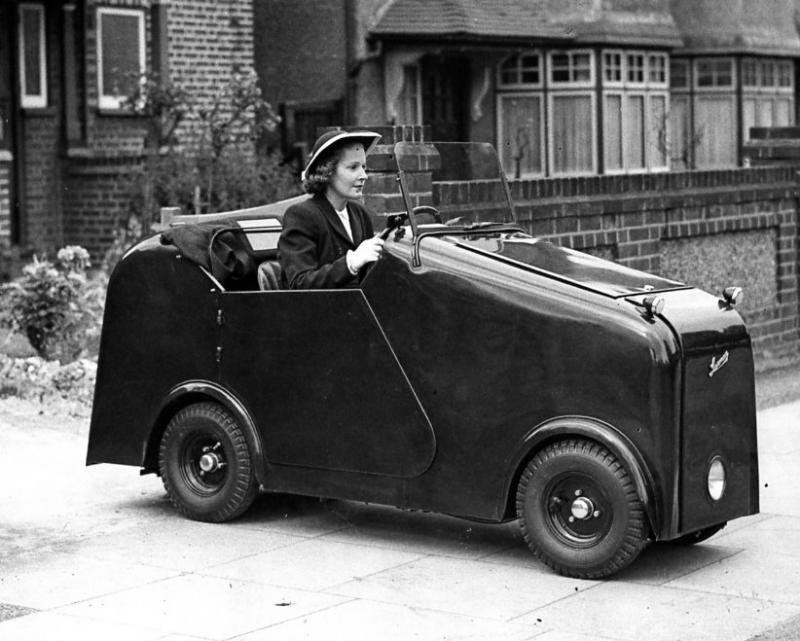
The rear-engined, rear-wheel drive Larmar has the distinction of being the world’s narrowest car at twenty-eight inches (71 cm),[a]The Peel P-50, the world’s smallest car, is more than 12 inches (30 cm) wider designed to be able to navigate through a standard English garden gate, thirty inches (76 cm) wide.[1]
Manufactured by the Larmar Engineering Company of Brentwood, Essex,[b]The company was incorporated in 1942, and was declared insolvent in 2022.[2] the Larmar was initially targeted for women to use as a shopping car, but later models offered hand controls for physically disabled drivers.[1]
The Larmar is powered by a BSA single-cylinder, 4-stroke, air-cooled, 246 cc (15 in3) motorcycle engine, and has four-wheel independent suspension.[1]
A 1946 model, in rather poor condition, was auctioned at Sotheby’s in 2013 and achieved a sale price of $4,600, about £3,900.[3][c]Calculated using the retail price index.[4]
| Manufacturer: | Larmar Engineering |
| Production: | 1946–1951[1] |
| Top speed: | 35 mph (56 km/h) |
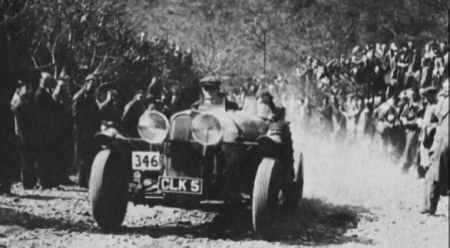 Series of one-off competition cars produced between 1934 and 1939, the first of which was CLK 5.
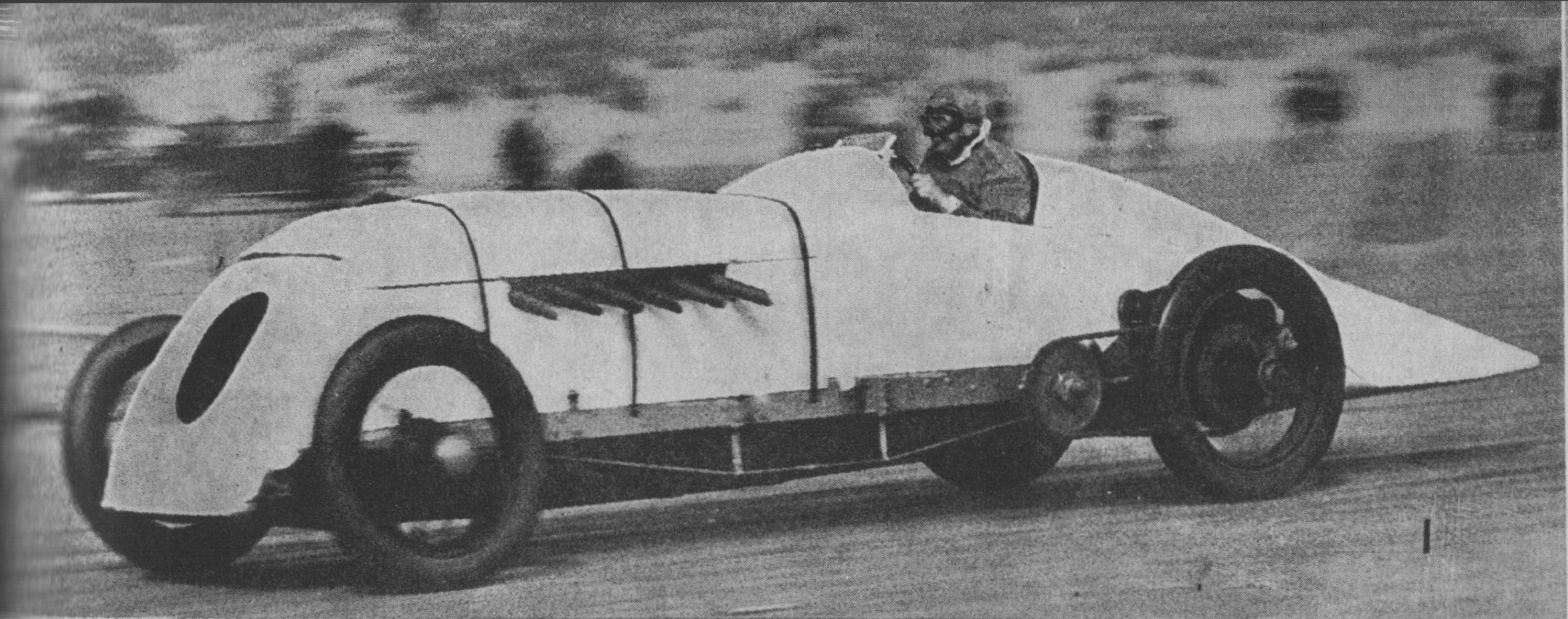 Car built and driven by John Parry-Thomas to a world land-speed record of 171 mph (275 km/h) in 1926.
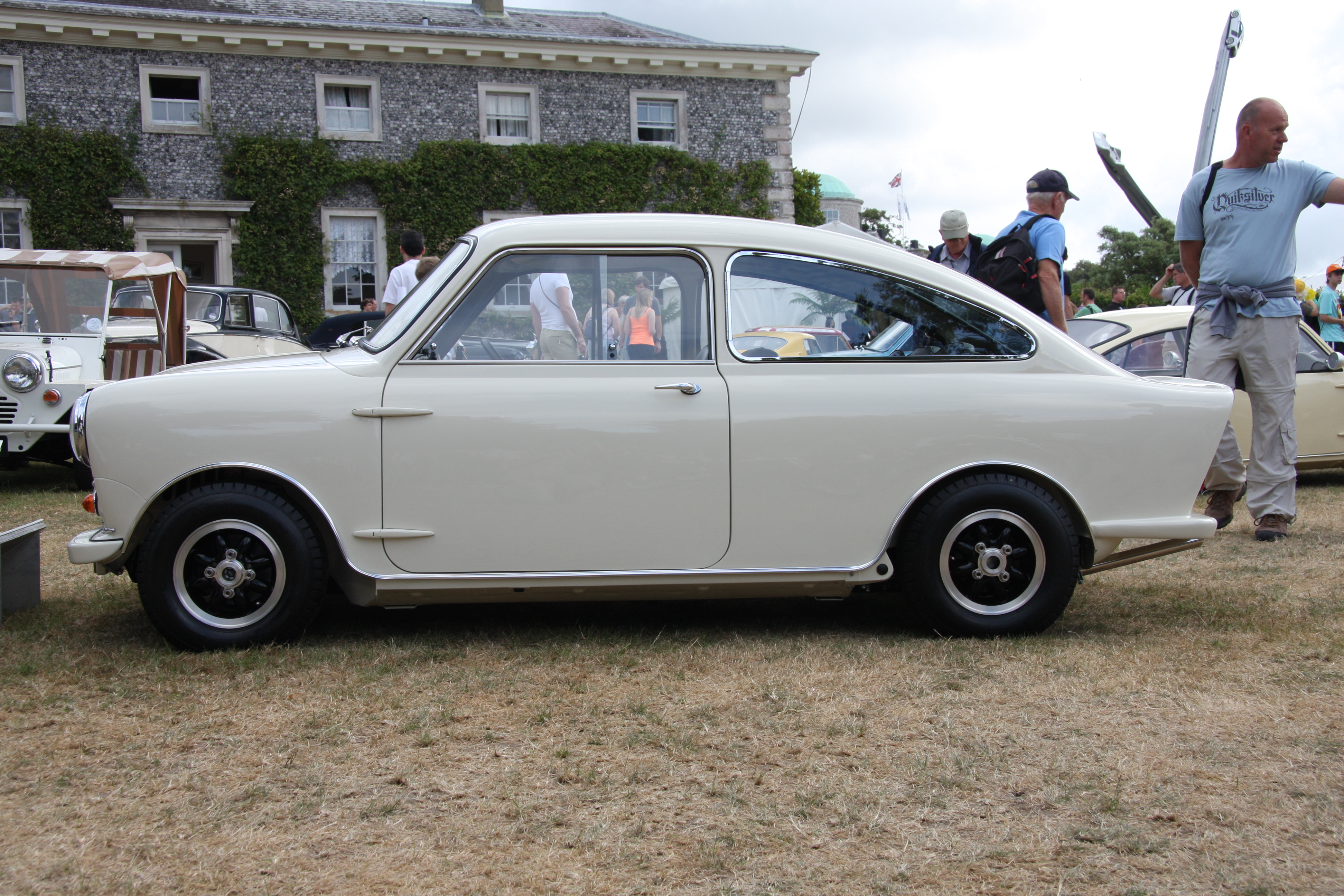 Mini-based fastback-styled motor vehicle designed by Tony Bloor, Broadspeed’s sales manager.
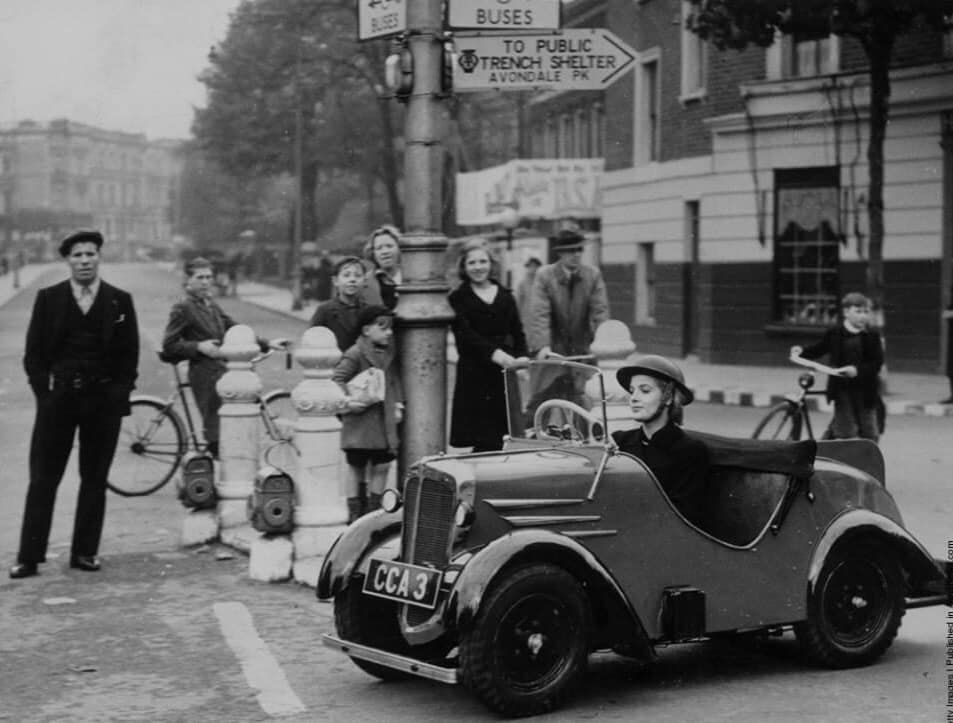 Fairground dodgem car converted to road use by the British Motorboat Manufacturing Company, produced from 1934 until 1940.
 Mini-based beach buggy-styled motor vehicle designed by Barry Stimson.
 High-performance V8 version of the British Rootes Group’s Sunbeam Alpine roadster, designed in part by the American car designer and racing driver Carroll Shelby and produced from 1964 until 1967.
