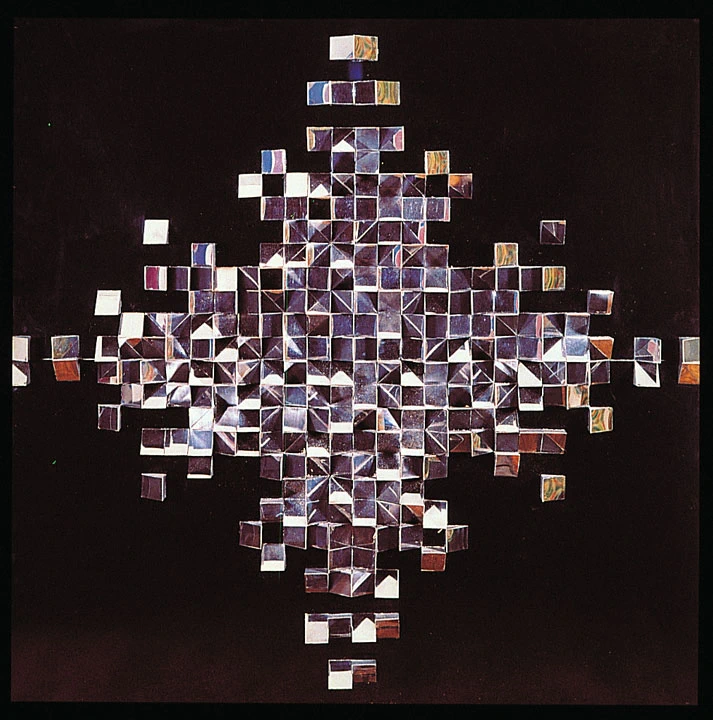
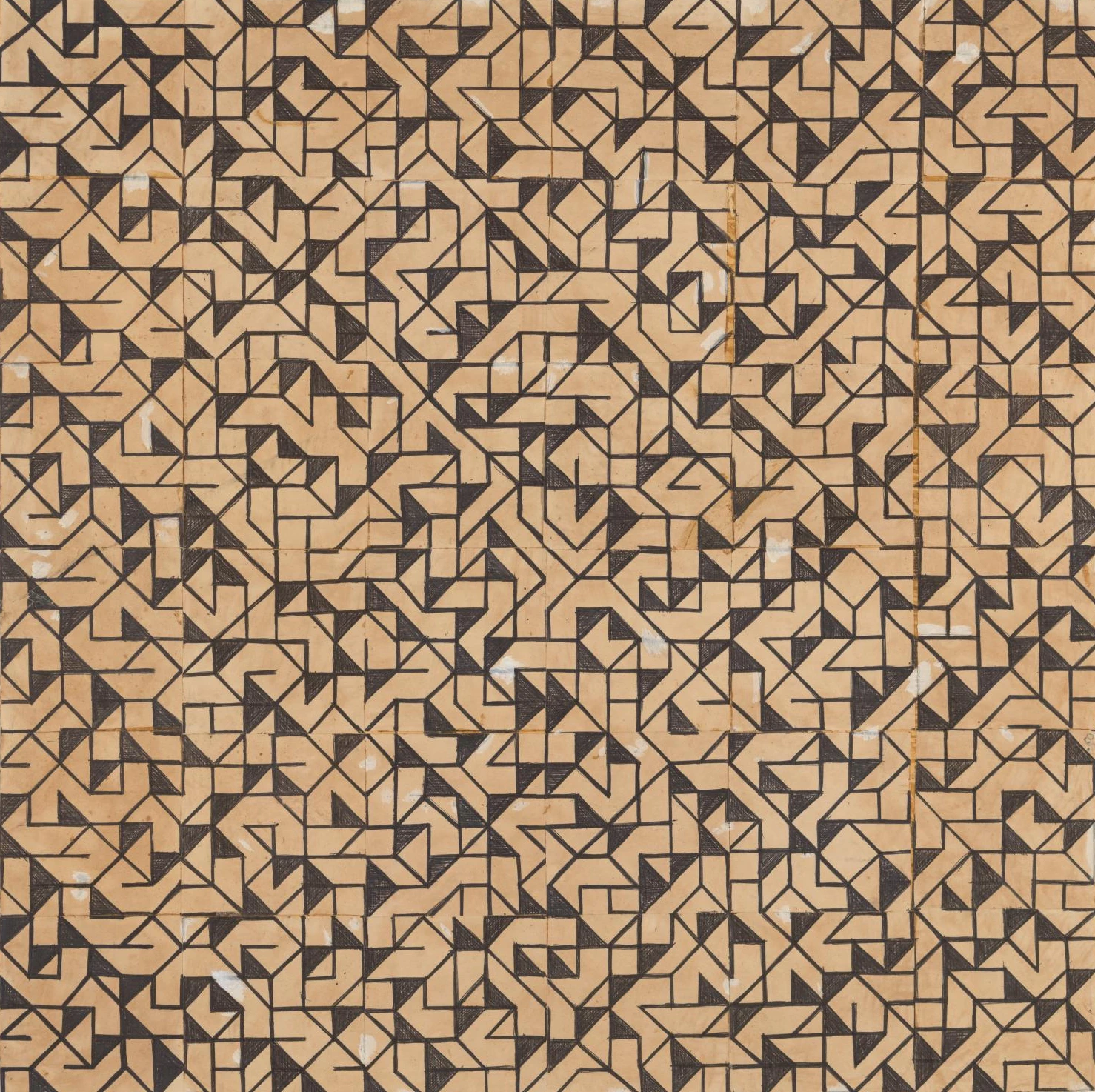
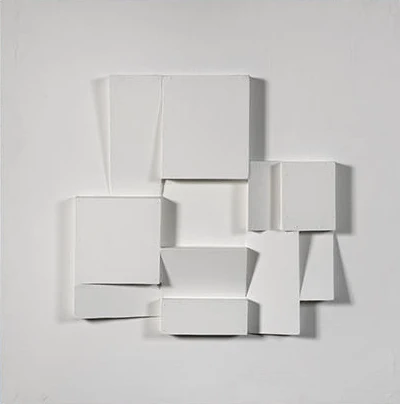
Mary Adela Martin, née Balmford, (16 January 1907 – 9 October 1969) was an English painter and sculptor. She began her artistic career painting still life and landscape, but by 1950 had moved away from figuration and was working almost exclusively with constructed reliefs.[1][2] She became a leading figure in the constructivist revival in Britain, a movement which sought “to explore natural laws of space and light rather than make figurative representations”.[3]
Born in Folkestone, Kent, Mary was the only child of John Archibald Balmford, a pharmacist, and Sarah Hannah Balmford, née Hanson. She attended Folkestone county school from 1915 until 1925, and was awarded a scholarship to Goldsmiths’ School of Art, London, from 1925 to 1929. She then went on to the Royal College of Art from 1929 until 1932, where she met her future husband, the sculptor Kenneth Martin, whom she married in 1930.[1][2]
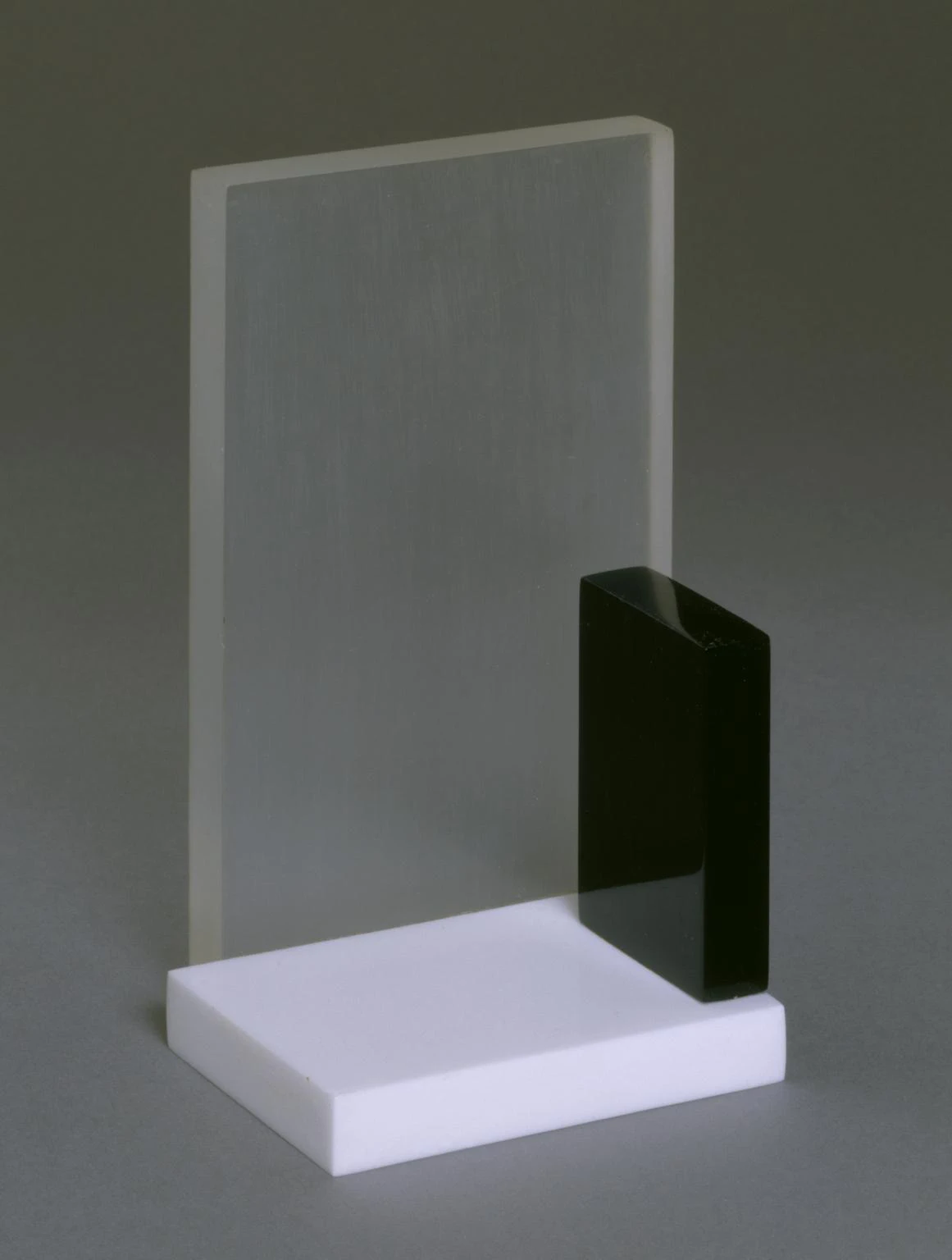
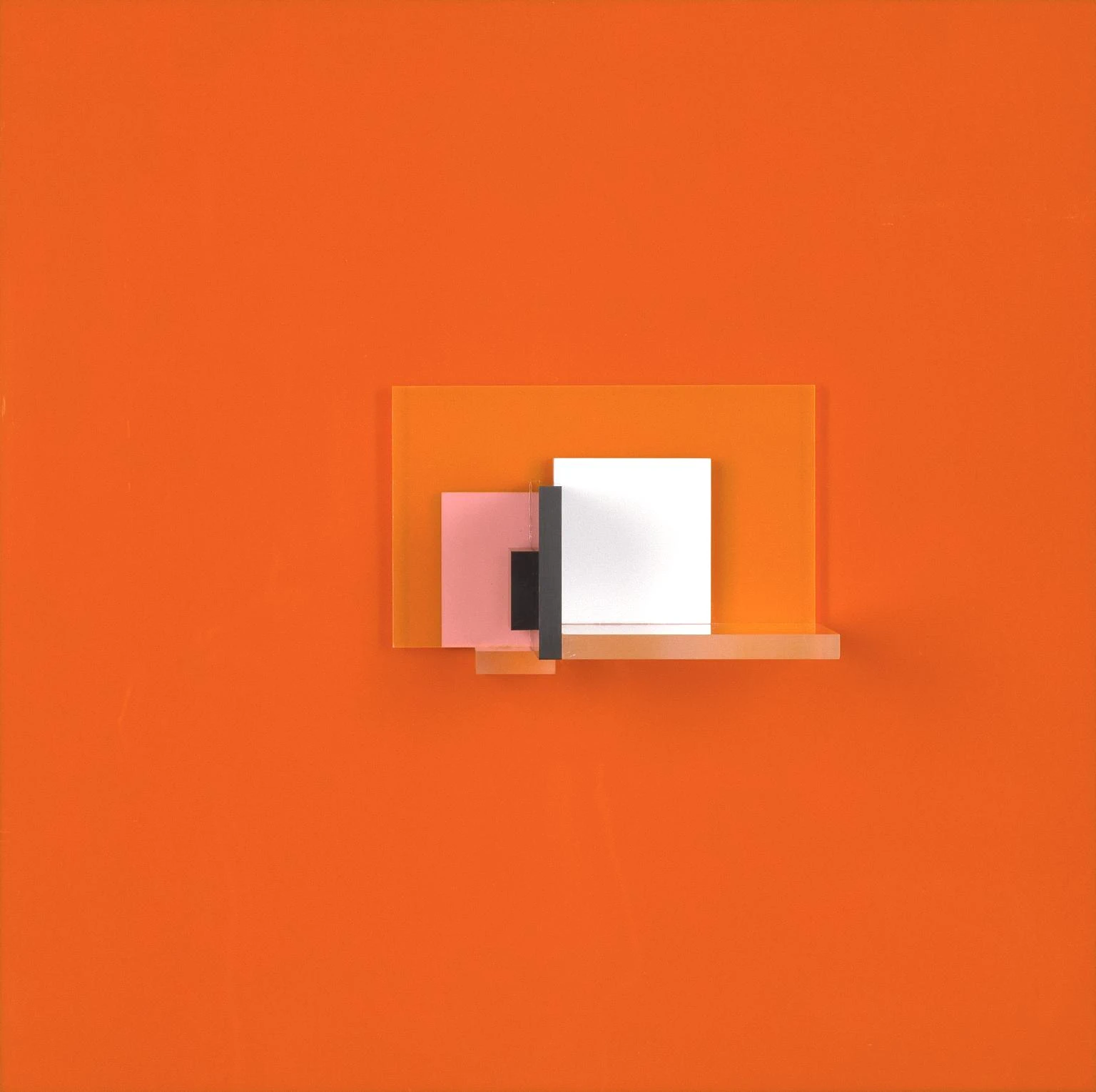
Mary began to design rugs in the early 1930s, commissioned from Fortnum and Mason as well as from architects and private clients. She secured teaching posts at London institutes, ending up at the Chelmsford School of Art, where she taught drawing, painting and design, and became head of the weaving department until 1943. When Mary returned to painting in 1948, after dedicating four years to raising her two young sons, she quickly became dissatisfied with paint as a medium able to express the geometrical theories of artwork espoused by those such as Matila Ghyka and Jay Hambridge. A desire to use real space and real materials led to her move away from representational work, and towards her constructed reliefs,[2] in which she used a “limited repertoire of forms”, often a dissected cube.[3]
Mary Martin died of cancer at the age of sixty-two, in Hampstead General Hospital, London, on 9 October 1969; she was cremated on 14 October at Golders Green crematorium.[2] A month after her death she was announced as the joint winner with Richard Hamilton of the John Moores Painting Prize for her work Cross, making her the first woman ever to have received the prize.[4] The Tate Gallery held a retrospective of Mary’s work in 1984.[1][3]