Wikimedia Commons
Marlow Moss (29 May 1889 – 23 August 1958), initially known as Marjorie Jewel Moss until she cut her hair short and changed her name to the gender-neutral Marlow, was an English painter and sculptor. She was a leading figure in the British constructivism art movement that began in the 1950s, but was “shunned by much of the art world in her lifetime”.[1][2][3]
Marlow was born in Kilburn, London, the daughter of Lionel Moss, a master hosier and clothier, and his wife, Frannie Jacobs. She attended the St John’s Wood School of Art in 1916–1917 before transferring to the Slade School of Fine Art, but found both establishments “overly traditional and unsatisfactory”. She left the Slade in 1919, probably as a result of a mental breakdown, and went on to lead a “solitary, unproductive life in Cornwall”, until a biography of the scientist Marie Curie encouraged her in 1923 to study philosophy, literature, architecture, mathematics, and art in the British Museum reading room. In 1924 Marlow moved to Cornwall, where she remained until 1926, studying sculpture at the Penzance Municipal School of Art.[1]
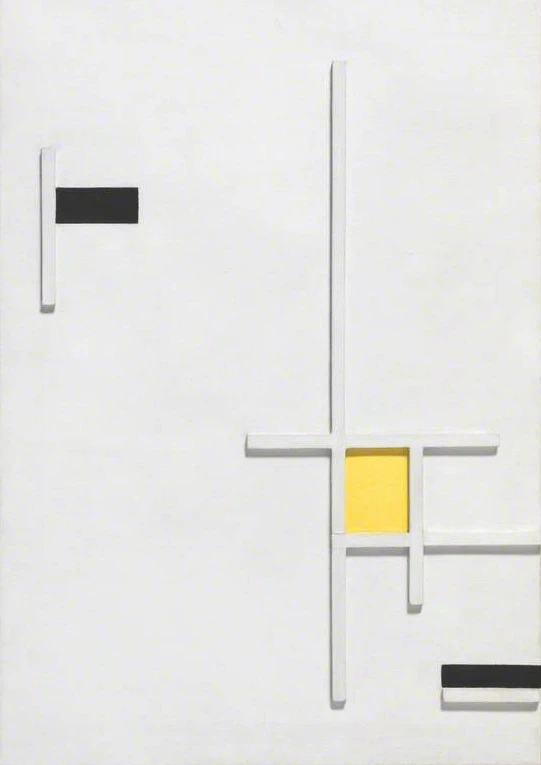
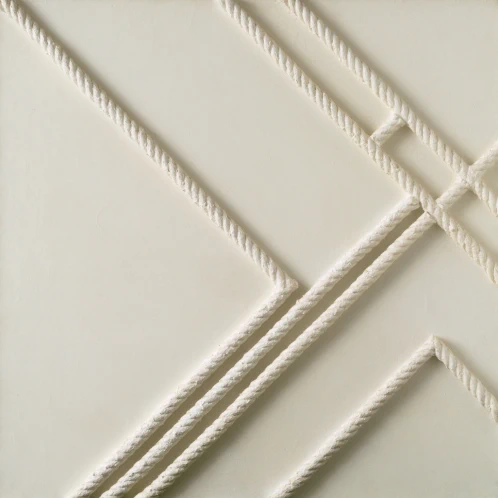
Marlow moved to Paris in 1927, and enrolled at the Académie Moderne, where she studied under Fernand Léger and Amédée Ozenfant. There for the first time she encountered the works of Mondrian, whom she met two years later in 1929, and with whom she remained in close contact until 1938.[1] There has been some debate in the art world about the relationship between Mondrian’s work and that of Marlow, but it is now generally considered that Mondrian’s work was as much influenced by Marlow’s as hers was by his, particularly in his adoption of Marlow’s double line to divide space.[3] Marlow’s “precise calculation and structure carried out with compass and ruler” also predates her awareness of Mondrian’s methods.[4] Her use of sculptural lines in the form of cord reliefs also differentiates her work.[2]
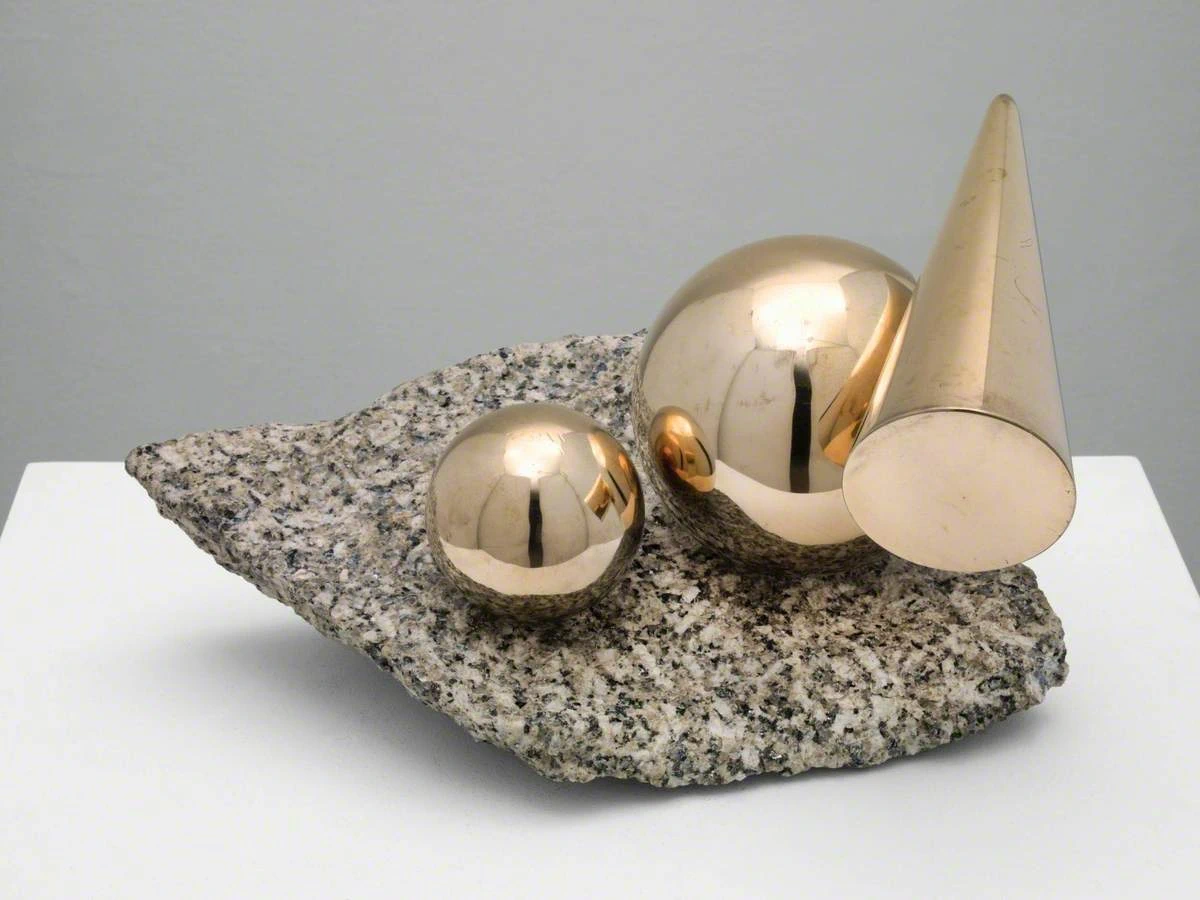
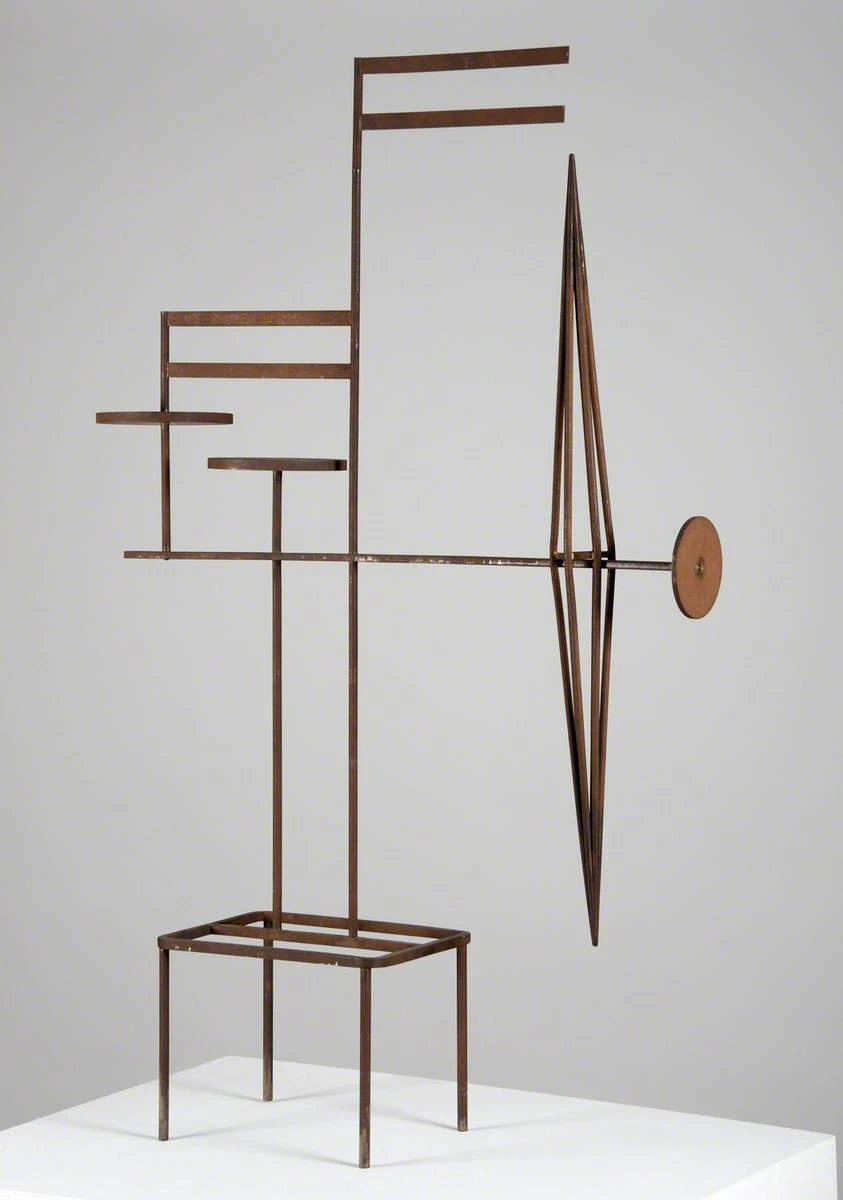
In 1937 Marlow bought the Château d’Evreux, at Gauciel in Normandy. Shortly after the German invasion of France in 1940 she returned to England and rented a bungalow in Cornwall. In 1941 she returned to the Penzance School of Art to study architecture, and began to make constructed metal sculptures. Marlow’s French home was destroyed by German bombs in 1944, along with almost all of her pre-war work.[1]
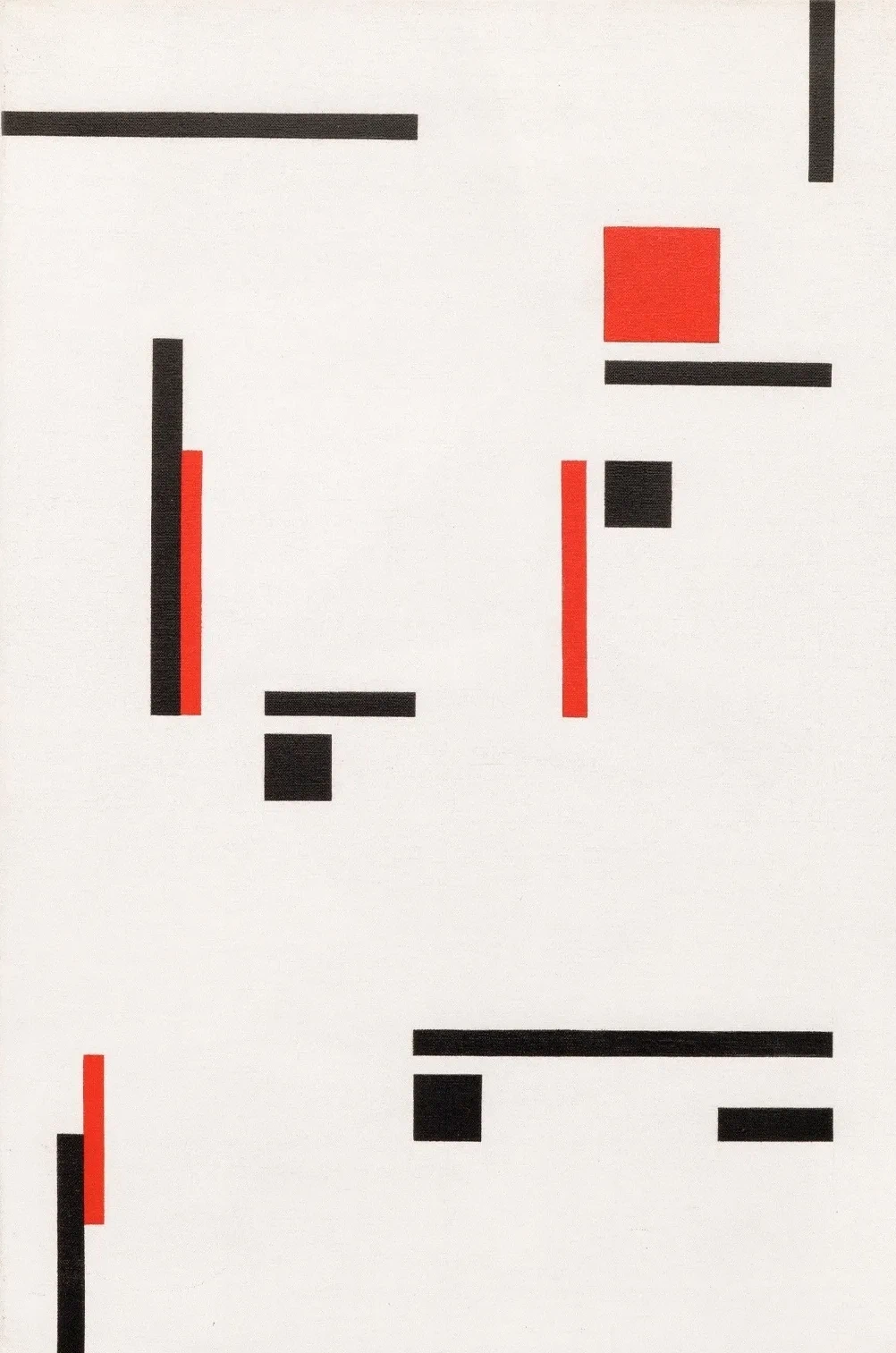
Marlow had her first solo exhibition at the Hanover Gallery in London in 1953, followed by a second in 1958. In her later paintings, which became increasingly colourful, she used primary colours not separated by black lines. She died of cancer in Penzance on 23 August 1958, and her ashes were scattered on the sea near Lamorna, Cornwall.[1]