


Wikimedia Commons
St Nicholas is an active Anglican church in the village Small rural collection of buildings with a church. of Ringwould, Kent. It is in the Archdeanery of Ashford, the Deanery of Sandwich, the Diocese of Canterbury, and is one of the seven churches in the BeneficeOriginally used in feudal societies to describe a grant of land as a reward for services rendered. In modern usage it refers to a collection of parishes working together under a single incumbent. of Walmer and Cornilo.[1]
The oldest parts of the Grade I listed Structure of particular architectural and/or historic interest deserving of special protection. church date from the 12th century, with 14th-century alterations. The west tower was built in 1628, and restored in the late 19th century.[2]
Architecture
Exterior
St Nicholas is built of flint, with red brick dressings. It consists of a chancel Part of a church containing the altar, used by the officiating clergy., nave
 Central part of a church, used by the laiety. with north aisle
 Part of a church on either side of the nave or choir, separated from them by arcades, colonnades or piers. More generally, a passageway between seats in an auditorium, shelves in a supermarket and so on. and south porch
 Vestibule before the main entrance to a Christian church, less sacred than the church proper. and western tower. The north doorway
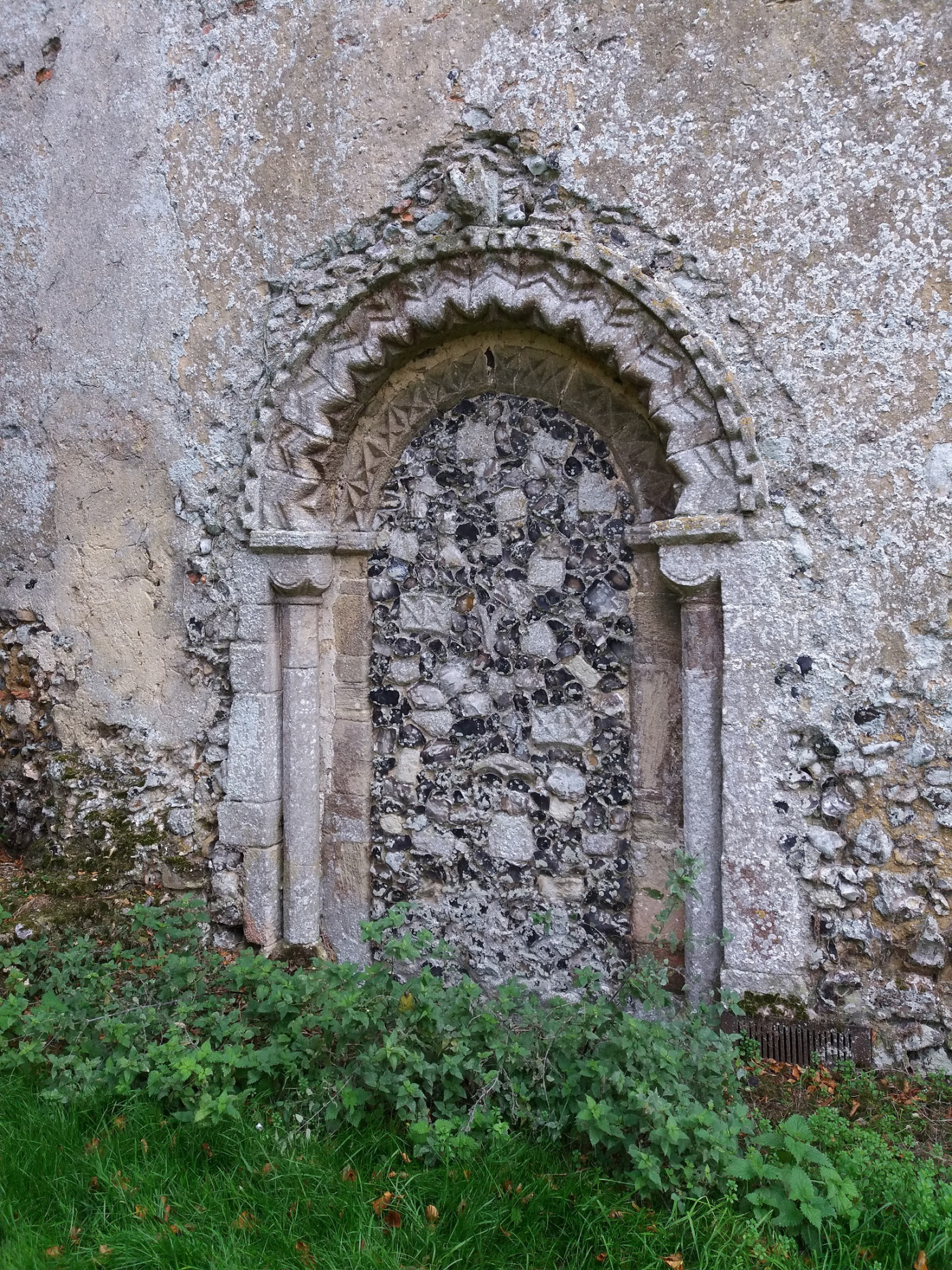 Blocked-up door in the north wall of a church, once believed to have been an escape route for the Devil when he left a child as a result of the sacrament of baptism. has been bricked in. The tower’s south-eastern turret has a lead cupola
 Small dome on top of a roof or other high structure. and an ornate wrought-iron weather vane.[2] The cupola served as a navigation aid for sailing ships.[3] The windows generally date from the 19th century, except for a 14th-century lancet
 Tall, narrow window typically associated with the Gothic architectural style. in the south porch.[2]
Interior
The nave has a north arcade Series of arches carried on piers, columns or pilasters. Also used to denote a covered avenue with shops on one or both sides. of four bays on 14th-century octagonal piers. The 13th-century sedilia
 Seats for the officiating clergy found on the south side of an altar. has been heavily restored; only the lower half is original. All other fittings except for the parish chest, dated 1634, are from the 19th century.[2] Many of the numerous memorial plaques are to the Monins family, who were patrons of the church.[3]
