

“A View from a Hill” is a horror story by the English medievalist and author M. R. James (1862–1936). First published in the London Mercury in May 1925, it was included in his A Warning to the Curious and Other Ghost Stories Collection of six short stories by the English medievalist and author M. R. James, first published in 1925. (1925) and The Collected Ghost Stories of M. R. James
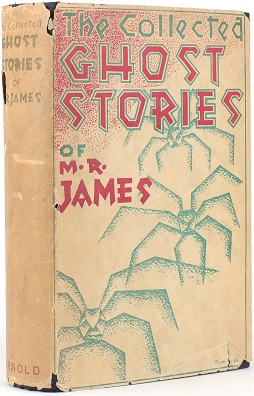 Collection of all but four of the ghost stories written by the English medievalist and author M. R. James, first published in 1931. (1931.[1]
Told as a third-person narrative, the story concerns a mysterious set of old binoculars that show scenes from the past.
Synopsis
Fanshawe, “a man of academic pursuits”, is visiting his friend, squire Henry Richards, in the English countryside.[a]James stated that the story is imagined to take place in Herefordshire.[2] On their first evening together they decide to climb a hill with a view of the area. Fanshawe, lacking binoculars, borrows a heavy, old-fashioned pair from Richards, which are stored in a difficult-to-open box. After Fanshawe sustains a minor cut opening it, they set out, with Richards pointing out the local landmark known as “Baxter’s Roman villa.” He explains that Baxter, an unpopular watchmaker and amateur archaeologist, crafted the binoculars, with which he subsequently uncovered various artifacts, which Richards bought along with the binoculars following Baxter’s death.
Having reached the summit of the hill, Richards instructs Fanshawe to observe Fulnaker Abbey through the binoculars. The tower Fanshawe sees is impressive, at which Richards insists the tower he is seeing must be that of Oldbourne Church. Fanshawe, through the binoculars, also perceives a disturbing scene on Gallows Hill; a gibbet and a crowd around it, which, Richards assures him, does not exist. When Fanshawe looks without the binoculars, he sees only trees.
That night Fanshawe has a nightmare in which he feels the sensation “that something had been let out which ought not to have been let out”. In his dream he is walking around the garden when he discovers a “curious” stone in a rockery. On removing it, a tin label falls down by his feet, inscribed “On no account move this stone”, signed by Richards’ elderly butler, J. Patten. As he bends down to examine where the stone had been, he sees that its removal has revealed the entrance to a burrow, from which a hand emerges. Initially clean and in an attitude suggestive of a handshake, it begins to grow hairy and dirty, stretching out as if to take hold of his leg.
Fanshawe sets off by bicycle the following afternoon to explore Oldbourne Church and Gallows Hill. At Richards’ suggestion, he also visits Lambsfield Church to see its stained-glass window. There he attempts to use the binoculars to read the window’s inscriptions, but finds they do not work inside the church. Oldbourne Church’s tower appears entirely different from what he had seen the previous day. When he arrives at Gallows Hill, he discovers it to be densely wooded, with no sign of the gibbet. Experiencing an unsettling sensation of being watched, “and not with any pleasant intent”, he descends from the hill, barking his shins on one of three stones set in a triangle, which he deliberately avoids stepping between.
Back at Richards’ home, Patten shares troubling stories about Baxter, who behaved suspiciously and refused religious practices. A priest who once visited Baxter refused to speak about the encounter, hinting at something sinister. Baxter reportedly spent many nights on Gallows Hill, and, after a bizarre scalding incident, he exhibited strange behaviour, moving as if controlled by an unseen force. He was later found dead between the three stones on Gallows Hill, his neck broken.
The next morning Fanshawe attempts once again to look through the binoculars, but sees only darkness. When Richards tries, he also sees nothing and drops the binoculars, which crack open to release a foul-smelling black liquid. Richards realises Baxter may have used boiled bones from hanged men to make the binoculars, to “see through a dead man’s eyes … But they didn’t like having their bones boiled, I take it, and the end of it was they carried him off whither he would not”. Richards decides to give the binoculars a decent burial.
Adaptations
“A View from a Hill” was adapted as the ninth episode in the BBC series A Ghost Story for Christmas. It was first broadcast on 23 December 2005,[3] and most recently on BBC 4 on Christmas Day 2017. It stars Mark Letheren as Fanshawe, Pip Torrens as Squire Richards, David Burke as Patten and Simon Linnell as Baxter. In the adaptation, Fanshawe is sent to authenticate the collection of his boss’s old school friend, Richards.[4] The impoverished squire plans to sell off the collection,[5] and the binoculars are discovered in a room at the inn at which Fanshawe is staying.[6]
Commentary
The glasses stopped working because they had been taken inside Oldbourne Church. “It is extraordinarily rare for MRJ to show Christianity as having any real effect against or power over the supernatural.” The only other potential example is the silver crucifix in “Canon Alberic’s Scrap-Book Horror story by M. R. James, first published in 1895, about a demon depicted in a picture coming to life.“.[2]
Notes
| a | James stated that the story is imagined to take place in Herefordshire.[2] |
|---|
References
Works cited
External links
- Full text of “A View from a Hill” at Project Gutenberg
