
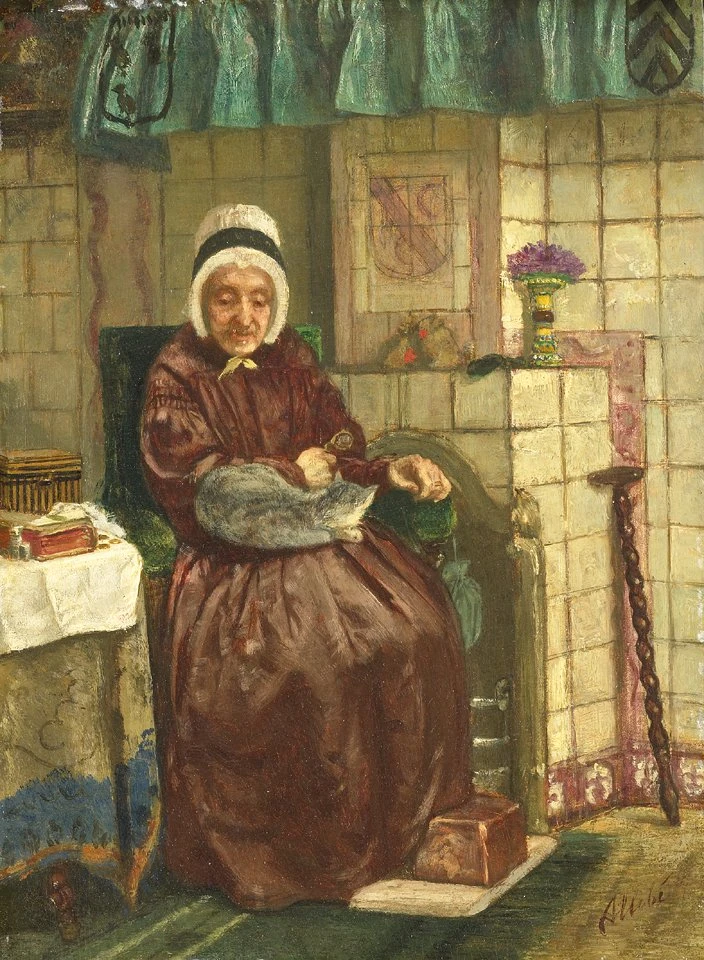
“An Evening’s Entertainment” is a horror story by the English medievalist and author M. R. James (1862–1936). It was first published in his A Warning to the Curious and Other Ghost Stories Collection of six short stories by the English medievalist and author M. R. James, first published in 1925. (1925), and was included in The Collected Ghost Stories of M. R. James
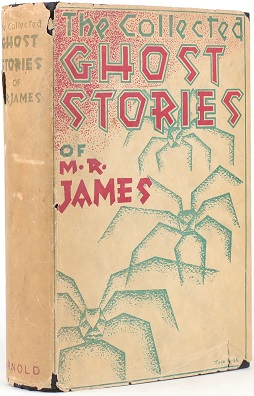 Collection of all but four of the ghost stories written by the English medievalist and author M. R. James, first published in 1931. (1931).[1] Told as a third-person narrative, the story’s framing device is a grandmother warning her grandchildren not to visit a certain lane in the neighbourhood, owing to the legacy of two men who were surmised to have become involved in idolatory, and who suffered gruesome deaths.
Synopsis
Sitting by the fireplace one evening, an old woman tells her young grandchildren, Charles and Fanny, that if they sit quietly and avoid waking their father she will allow them to go picking blackberries the next day. And if they come back with a good basketful she will make them some jam. Charles pipes up that he knows where the best blackberries are to be found, “in the little lane that goes up past Collins’s cottage”. His granny warns him that he must never pick a single blackberry on that lane, and when pressed by the children, tells them a story which her mother had told to her.
Long ago, a man named Davis had lived in a cottage on the lane. He was apparently independently wealthy, and did not associate with the other people of the parish. But he regularly went into town on market-days to collect his correspondence, and on one occasion brought a young man back with him; the pair lived together in the cottage for many years, their relationship a matter of some speculation. The two men were often seen roaming around the downland and woods late at night and early in the morning, and regularly visited a hill figure cut out in the hillside, camping there overnight during the summer. Granny recalls that her father, the squire who owned the land, had once asked Davis if they did not find the place lonely in the middle of the night, to which the young man replied “Oh, we don’t want for company at such times”.
About three years later, a woodman found the body of the young man hanging from an oak tree in a clearing deep in the woods, dressed in a white gown with a bloody hatchet near his feet. When a party led by the parson went to retrieve the body, they found an old-looking “little ornament like a wheel” hanging on a chain round its neck. A boy was sent to Davis’s cottage to notify him, but was found lying in the village street surrounded by a group of concerned women, “as white as paper, and not a word could they get out of him, good or bad”. When the horse on which the body was being transported neared Davis’s cottage it reared with fear, throwing the body to the ground. Carrying the the young man’s body into Davis’s cottage, the party found Davis’s body lying on a table, bound with linen bands, with an axe wound in the chest which has split his sternum. Searching the cottage, they found sleeping potions, leading to their surmise that the young man had drugged and murdered Davis, then killed himself out of remorse. Papers found in the cottage suggested that Davis and his young man were idolators.
The residents of the parish were unwilling to have Davis and the young man given a Christian burial in the consecrated ground of the churchyard, so it was agreed to bury them at a crossroads. While the bodies were being transported, blood from Davis’s body fell to the ground, leaving bloodstained patches on the lane, which by the following day were covered with large black flies. The squire ordered that they be covered with clean earth from the churchyard. As it was being thrown onto the blood, the flies dispersed in a solid cloud, eliciting from the old sexton the remark “Lord of flies, sir”.[a]Baal‐zebub, or Beelzebub, is the name of an Old Testament demon, meaning in Hebrew “lord of flies”.[2] The squire subsequently arranged for the cottage and its contents to be burned.
Granny concludes her story by saying that one March evening, when she and her future husband had strayed inadvertently onto the lane while out courting, she was bitten on the back of her hand by a large black fly of an unusual kind, causing her hand and arm to swell up painfully. A “wise man” from a nearby village visited and cured her hand, remarking that “When the sun’s gathering his strength … and when he’s in the height of it, and when he’s beginning to lose his hold, and when he’s in his weakness, them that haunts about that lane had best to take heed to themselves”. She says she has heard of others suffering similar incidents, but notes they are growing less frequent. She then sends the children to bed, warning Charles not to frighten his little sister.
Commentary
The literary critic Peter Bell has described “An Evening’s Entertainment” as “one of [James’s] least favoured tales, perhaps because of its narrative structure [which] makes for a laboured beginning and a colloquial style”, adding that it is “an unusual foray by James into paganism”.[3]
Notes
| a | Baal‐zebub, or Beelzebub, is the name of an Old Testament demon, meaning in Hebrew “lord of flies”.[2] |
|---|
References
Works cited
External links
- Full text of “An Evening’s Entertainment” at Project Gutenberg
