
Gibbeting
 Public exhibition of the bodies of executed criminals by hanging them from a gallows-like structure, where they were left to rot, held together with iron hoops.
Public exhibition of the bodies of executed criminals by hanging them from a gallows-like structure, where they were left to rot, held together with iron hoops.
The last woman in England to have been sentenced to be burnt at the stake.
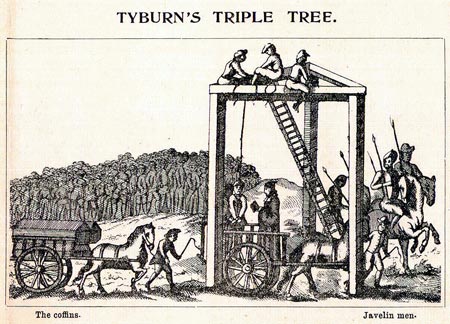 Name given to the system of crimes and punishments in force in England during the 18th and early 19th centuries, resulting in the death penalty for offences that would today be considered minor.
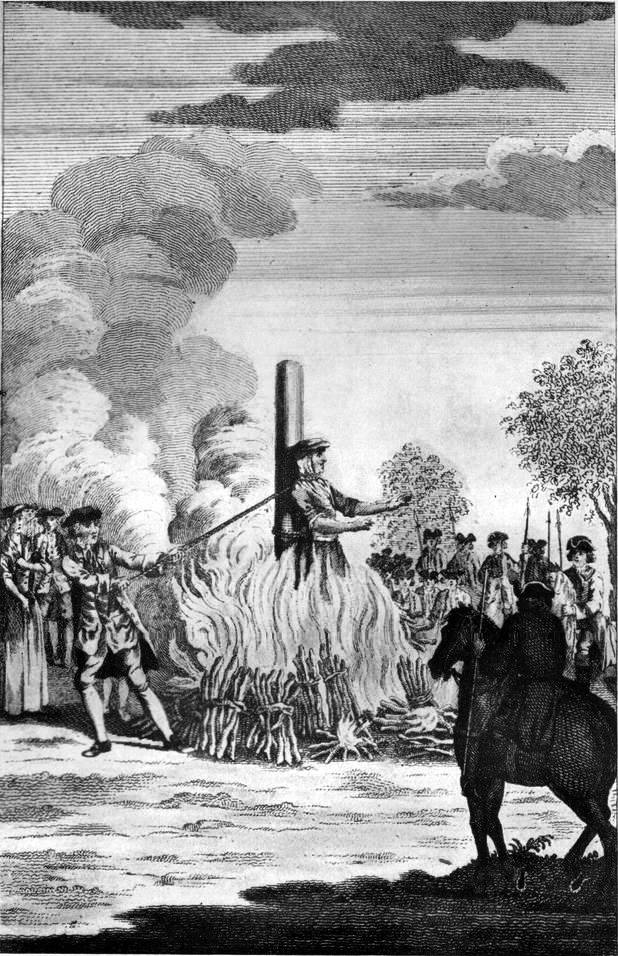 Burning was a legal punishment imposed on women found guilty of high treason, petty treason or heresy. Over a period of several centuries, female convicts were publicly burnt at the stake, sometimes alive, for a range of activities including coining and mariticide.
 Law passed in 1401 during the reign of King Henry IV, allowing heretics to be burned alive.
 Statutory penalty in England from 1352 for men convicted of high treason, not repealed until 1870.
Catherine Hayes née Hall (1690–1726), was the last woman in England to be executed by being burned alive.
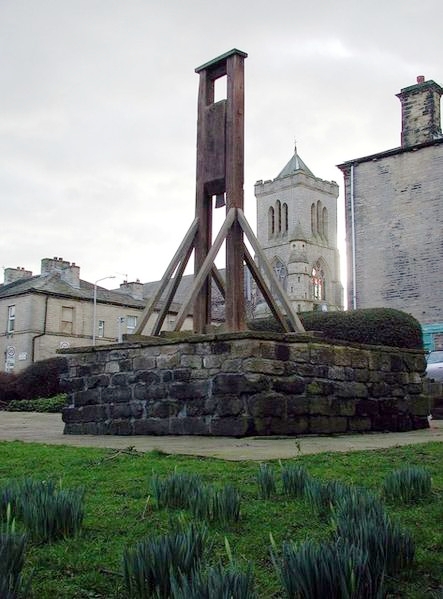 Early guillotine, or decapitating machine, used in the town of Halifax, West Yorkshire, England. It was probably installed during the 16th century as an alternative to beheading by axe or sword.
 Act of Parliament that put an end to public executions for murder in the United Kingdom.
[wpdreams_ajaxsearchlite]
Some hopefully helpful guidance on how certain aspects of our articles are implemented.

| Gibbeting | |
|---|---|
| Public exhibition of the bodies of executed criminals by hanging them from a gallows-like structure, where they were left to rot, held together with iron hoops. (Image included) |
|
| 8 | |
| 48 | |