

Microscopist.net
The London Stereoscopic Company (LSC) was founded by George Swan Nottage (1823–1885), in partnership with his cousin Howard John Kennard (1829–1896). Although primarily a photography studio and retailer of photographic equipment and supplies, the LSC also sold microscopes and prepared slides, and catered for other Victorian pastimes.[1] During the 1850s, for instance, at a time when likenesses of dead people began to appear in spirit photographs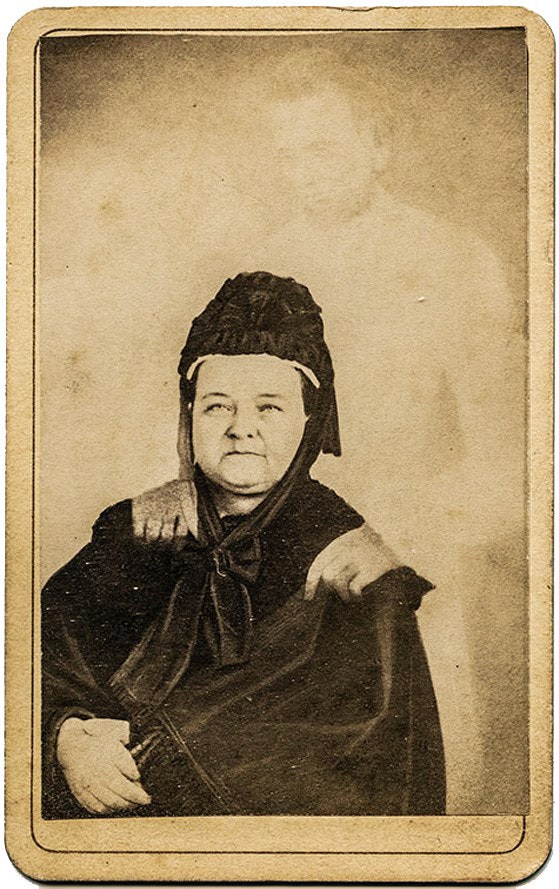 Technique popular in the 19th century to capture the invisible spirits of the deceased., they created staged stereographs featuring “ghosts”.[2][3]
By 1856 the company had changed its name to The London Stereoscopic Company, and again in May 1859 to the London Stereoscopic and Photographic Company, the name it retained until its dissolution in 1922.[4]

Wikimedia Commons
The LSC was a leader in the boom for producing stereo views of “every conceivable subject, which when viewed by means of a stereoscope, presented scenes in life-like three dimensions”. In a February 1856 advertisement in the Photographic Journal, they claimed to have “The largest collection in Europe, upwards of 10,000” stereo views.[4] The company was chosen as the official photographer for the 1862 London International Exposition.[1]
The craze for stereo cards fizzled out during the late 1860s, but the LSC survived by selling and licensing images, photographic equipment, papers and plates. It seems the company subsequently fell into a gradual decline, as it was unable to take advantage of the resurgence of interest in stereoscopy at the turn of the century.[4]
Resurrection
A business bearing the same name was established in 2005,[5] championed by the musician and astrophysicist Brian May, who is a director of the company:
