

Wikimedia Commons
Skotography is the process by which purported spirit photographs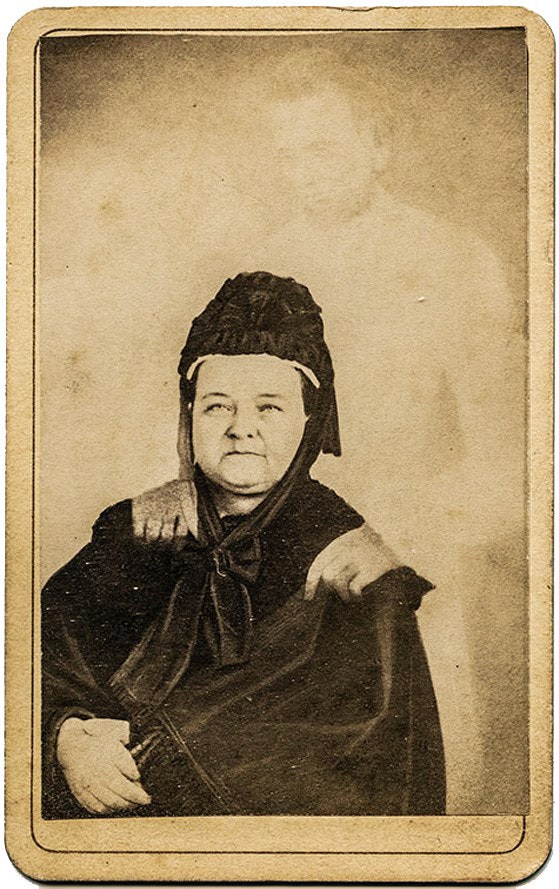 Technique popular in the 19th century to capture the invisible spirits of the deceased. are produced on paper, cloth or film during a séance.[1] The term was coined by the English journalist and spiritualist Felicia Scratcherd (1862–1927), and is derived from the Greek for “dark-writing”.[2] The earliest skotographs, originally known as dorchagraphs, originate from the 1890s.[3]
A modern practitioner has described the process of skotography as follows:[4]
In a skotography séance investigated by the magician James Randi, reported in 1982, each participant was handed a two-inch square of what appeared to be blank enlarging paper. The sitters were told to hold their paper between the palms of their hands, while praying and concentrating on the square. They were then to told to immerse their papers in three chemical baths in front of them: developer, fixer and wash water, after which the image of a face appeared on each paper.[1]
By the simple expedient of persuading one of the participants in the séance to covertly substitute his square of enlarging paper with one provided by Randi, it was proved conclusively that the séance was a fraud.[1] But as is common with such exposures, “there is no dissuading the true believer”. While accepting that he had been deceived on that occasion, Randi’s collaborator refused to believe that he had been similarly deceived on other occasions, and continued to participate in the séances organised by his Spiritualist System of beliefs and practices intended to establish communication with the spirits of the dead. church.[1]
See also
- Thoughtography
 Ability to produce a visible image, usually photographic, by purely mental means.
