
Margery Jourdemayne, known as the Witch of Eye, or the Witch of Eye next Westminster, was an English woman who in 1441 was executed by being burnt at the stake after having been found guilty of heretical witchcraft, conspiring with others to bring about the death of King Henry VI through the use of sorcery.[1][2][3]
Witchcraft was not a crime punishable by death in England until 1542.[4] But under the 1401 law of de heretico comburendo Law passed in 1401 during the reign of King Henry IV, allowing heretics to be burned alive., convicted heretics were to be “burned before the people in a prominent place”;[5] in Margery’s case that was Smithfield, in London.[3]
Margery’s husband, William, was a manorial official on Westminster Abbey’s Ebury (Eye) estate, and came from a prosperous Middlesex yeoman family.[2] Margery seems to have first come to the attention of the authorities in 1430, when in November that year she was arrested and imprisoned in Windsor Castle, accused of sorcery.[6] It may be that Margery was one of the seven witches arrested in London in 1430, accused of plotting the death of King Henry.[2] Margery was released in May 1432, on condition that she would never again use “sorcery or witchcraft”.[6]
1441 conspiracy
But Margery appears nevertheless to have continued her work in charming “fiends and fairies”.[7] She again fell foul of the authorities when in 1441 she was charged with supplying Eleanor Cobham English noblewoman forcibly divorced from her husband and sentenced to life imprisonment for treasonable necromancy., the Duchess of Gloucester, with “medicines” and drinks intended to make the duke fall in love with her and marry her, which he did, and of making a wax image of the King, to be used to bring about his death. The duchess had been arrested at the end of June 1441, and initially maintained that the image was to help her to conceive, but eventually admitted to having asked Roger Bolinbroke to cast her horoscope to see if she would become queen, interpreted by the prosecution as an attempt to discover when the King would die.[1][a]It did not become an offence to use astrology or divination to predict the death of the monarch until the 1581 Statute of Silence
 Act of Parliament introducing a series of increasingly gruesome punishments for speaking or publishing anything that Queen Elizabeth I did not wish to hear.. But doing so could give rise to the suspicion that those involved might feel encouraged to fulfil the prophecy themselves. Henry VI was at the time unmarried and childless, so if he were to die, then Eleanor’s husband, Humphrey, Duke of Gloucester, would have become king.[8]
After Bolinbroke testified that everything he had done was at Eleanor’s direction, she fled to Westminster Abbey for sanctuary.[1] She had previously admitted to using love magic provided by Margery, thus making Margery a relapsed heretic in the eyes of the church, for which there was only one punishment, death.[9] At Eleanor’s second trial in October, Margery claimed in her defence, as Bolinbroke had done, that Eleanor had asked her to create the wax image, but to no avail; Margery was executed as a heretic and a witch on 27 October 1441.[1]
From a modern perspective, it seems likely that Margery Jourdemayne found herself caught up in a political intrigue surrounding the declining influence of the Duke of Gloucester, uncle of King Henry VI, who was becoming increasingly unpopular owing to his stance against peace negotiations with France.[2]
Literary representations

Wellcome Collection
Margery appears in William Shakespeare’s Henry VI, Part 2, as Margery Jourdain, conjuring up a spirit to reveal the results of competing claims to the throne of England.[10]
See also
- Witchcraft Acts
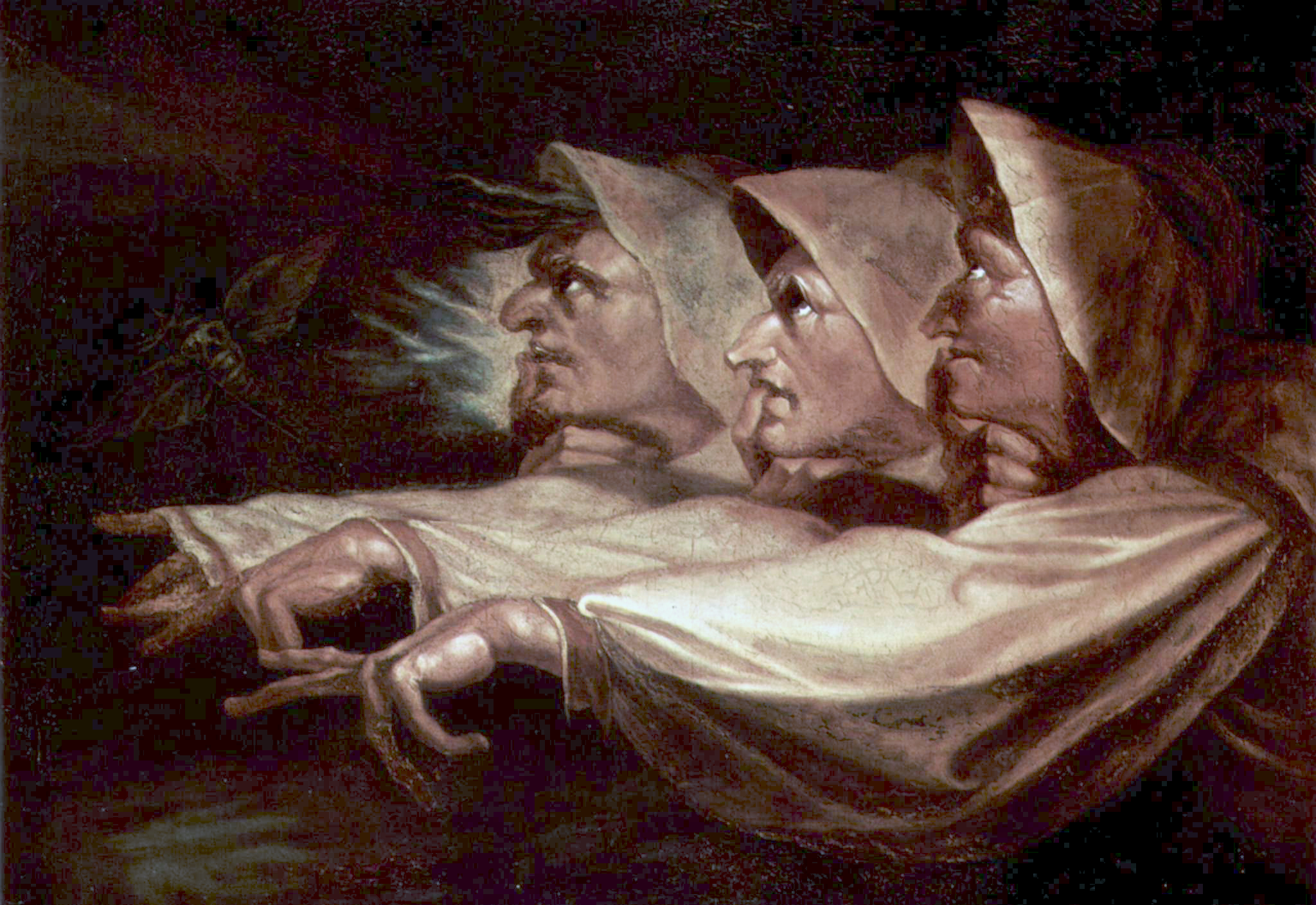 Series of Acts passed by the Parliaments of England and Scotland making witchcraft a secular offence punishable by death.
 - Burning of women in England
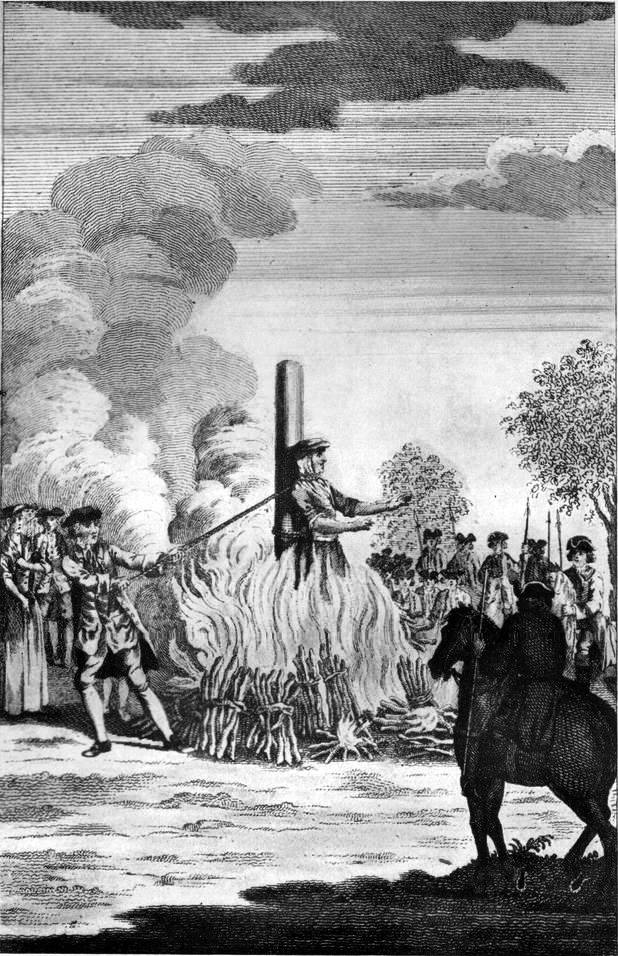 Burning was a legal punishment imposed on women found guilty of high treason, petty treason or heresy. Over a period of several centuries, female convicts were publicly burnt at the stake, sometimes alive, for a range of activities including coining and mariticide.
Notes
| a | It did not become an offence to use astrology or divination to predict the death of the monarch until the 1581 Statute of SilenceAct of Parliament introducing a series of increasingly gruesome punishments for speaking or publishing anything that Queen Elizabeth I did not wish to hear.. But doing so could give rise to the suspicion that those involved might feel encouraged to fulfil the prophecy themselves. Henry VI was at the time unmarried and childless, so if he were to die, then Eleanor’s husband, Humphrey, Duke of Gloucester, would have become king.[8] |
|---|
