

Wikimedia Commons
The New Forest coven was an alleged group of witches who met around the area of the New Forest in Southern England. The British occultist Gerald Gardner claimed to have been initiated into the coven, and subsequently incorporated its beliefs and practices into his tradition of Gardnerian Wicca. He described some of his experiences with the coven in his books Witchcraft Today (1954) and The Meaning of Witchcraft (1959), although on the whole revealed little about it, saying he was respecting the privacy of its members.
According to Gardner, members of the coven were followers of a pagan religion that had secretly survived after the Christianisation of Europe. This was in line with the now-discredited witch-cult hypothesis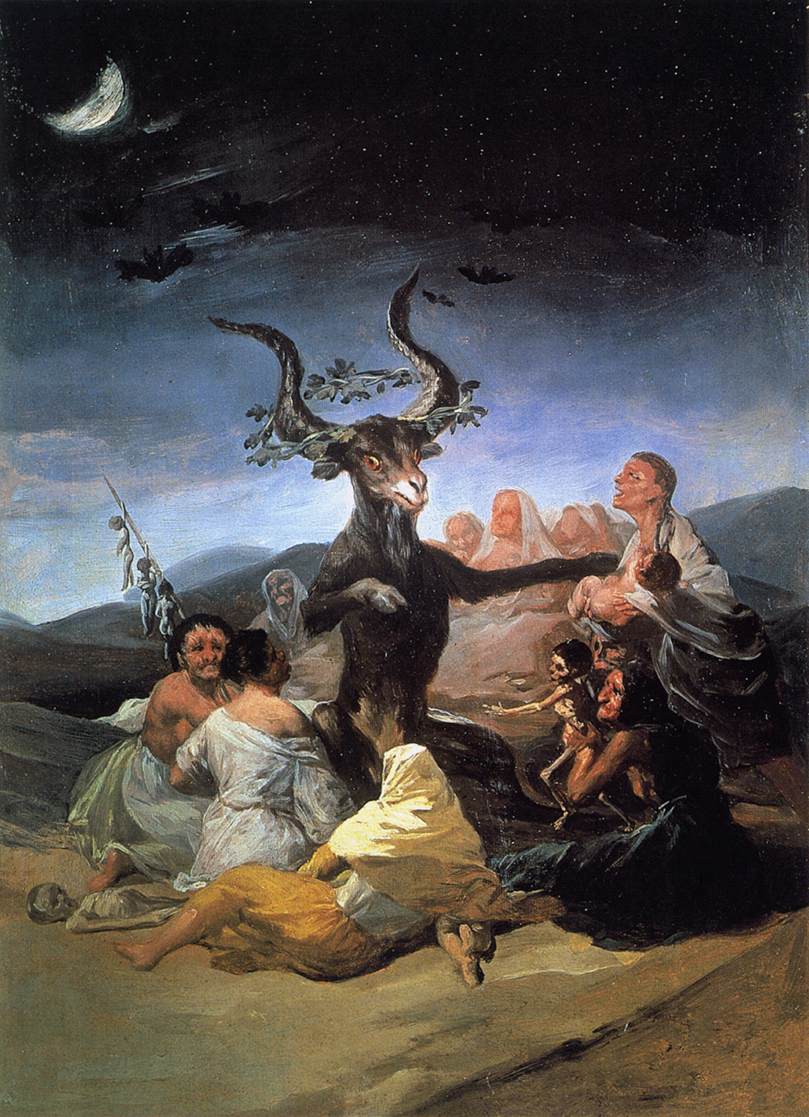 Now discredited idea popularised by the Egyptologist and folklorist Margaret Murray that the Early Modern witch trials were an attempt to suppress a pagan, pre-Christian religion. popularised by the Egyptologist and folklorist Margaret Murray in the early 1920s.
In the words of the historian Ronald Hutton, “no academic historian has ever taken seriously Gardner’s claim to have discovered a genuine survival of ancient religion”, although he did accept that it was not “implausible” that the coven had indeed existed.[1]
Origins
Gerald Gardner claimed that the New Forest coven was a survival of a supposed pre-Christian pagan religion that worshipped a Horned God and a Triple Goddess, and which had supposedly been persecuted during the witch trials of the Early Modern period. This theory about the witch trials had been put forward by various writers in the 19th century, such as Jules Michelet and Charles Leland, but had risen to prominence in the 1920s when it was promoted in two works by the Egyptologist and folklorist Margaret Murray: The Witch-Cult in Western Europe (1921) and The God of the Witches (1933). The idea of a pagan witch-cultNow discredited idea popularised by the Egyptologist and folklorist Margaret Murray that the Early Modern witch trials were an attempt to suppress a pagan, pre-Christian religion. has been dismissed by historians specialising in the Early Modern witch trials since Murray’s death in 1963,[2] with works by academics like Elliot Rose, Norman Cohn, Carlo Ginzburg and Keith Thomas instead showing the real nature of the witch trials as a combination of social, economic and religious factors. The historian Ronald Hutton has dismissed any possibility of the New Forest coven being a pagan survival.[3]
It seems likely that the New Forest coven was founded by various occultists who wished to “resurrect” the hypothetical witch-cult as described in Margaret Murray’s works. Philip Heselton, who performed the most exhaustive research into the group, speculated that the coven had been formed by Rosamund Sabine, who prior to moving to the New Forest in 1924 had been involved in various esoteric groups such as the Hermetic Order of the Golden Dawn. Heselton suggested she, after reading The Witch-Cult in Western Europe, became interested in witches, and believed herself to be the reincarnation of one. It was for this reason, he believed, that she gathered together some of her friends who shared an interest in the occult, and founded the coven.[4]
Gerald Gardner’s involvement
Gardner claimed that after moving to the borough of Christchurch, Dorset in 1939, he became involved with the Rosicrucian Order Crotona Fellowship, an occult organisation based upon Rosicrucianism. But he was largely dissatisfied with the Order, and in particular its leader, George Alexander Sullivan, believing them to be bereft of any genuine esoteric knowledge. Meanwhile, he met a group of people within the Fellowship who claimed to have been involved in a form of Freemasonry known as Co-Masonry, who informed him that they had moved to the area where they had joined the Rosicrucian Order when their friend and fellow Co-Mason, Mabel Besant-Scott, had done so.[5] The researcher Philip Heselton identified two of these individuals as Ernest and Susie Mason, a brother and sister couple who had previously been involved in a variety of occult groups, including Co-Masonry and Theosophy, and who had recently moved to the area from Southampton.[6]
Operation Cone of Power
Gardner would reveal little about the coven or its members, although he did claim that in August 1940, during the Second World War, they performed a ritual known as Operation Cone of Power which they hoped would influence the High Command of Nazi Germany and prevent them from invading Britain. This magical ritual, Gardner claimed, took place inside the New Forest, and involved the witches raising a Cone of Power which they directed toward Germany, and focused on sending the message into the minds of the German leaders that they would be unable to cross the English Channel.[7][8]
Gardner also noted that several of the older and frailer practising witches died after performing the ritual; that was confirmed by Louis Wilkinson, who suggested it might have been because they had performed the ritual naked, without goose grease on the skin to keep them warm, and that as such they had contracted pneumonia. Investigating these claims, Heselton found two locals who died soon after the ritual: a reporter, Walter Forder (1881–1940), and a blacksmith, Charles Loader (1864–1940), whom he speculated were involved in the rite.[9]
Members of the coven
According to Gardner, his first contact with the coven was through an inner group within the Crotona Fellowship, a Rosicrucian society that operated a theatre in Christchurch. They were a reserved group, who remained somewhat separate from other members of the order and the theatre. The historian Philip Heselton has identified some of the members of this group as Edith Woodford-Grimes, Ernie Mason, and his sisters Susie Mason and Rosetta Fudge.[10]
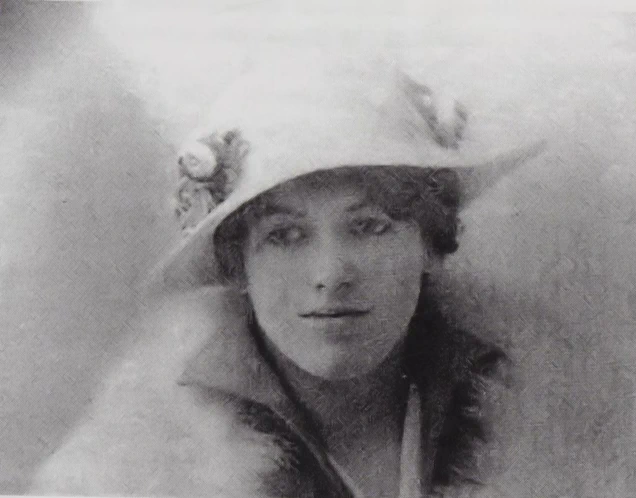
The priestess who initiated Gardner into witchcraft, referred to by him as “Dafo” or “Daffo”, has been reliably identified as Edith Rose Woodford-Grimes, a teacher of music and elocution.[11][12]
