

Wikimedia Commons
Death photographs, also known as post-mortem photographs, are commemorative pictures of recently deceased loved ones. They were particularly popular during the Victorian era, a time when “life was suffused with death”.[1] Suppressing the realities of death by commemorating it in a familiar setting, may have brought comfort to the bereaved.[2]
The invention of the daguerreotype in 1839 made portraiture commonplace. Many of those unable to afford the commission of a painted portrait, as the wealthier members of society were able to do, could afford to sit for a photography session,[3] providing the middle class with a way to remember their dead loved ones. And the long exposure times required by early photographic techniques made the deceased relatively easy subjects, as they were unlikely to move.[4]
As cheaper methods of photography were introduced in the 1850s, the popularity of post-mortem pictures began to wain, as most families could then have photographs of the bereaved taken while they were alive.[1]
 Process developed in the early 1940s to record corona discharges from living matter, believed by some to be evidence of an "aura" or "biofield".
 Leader in the 1850s boom for stereo photographic images.
 Process by which purported spirit photographs are produced in the course of a séance.
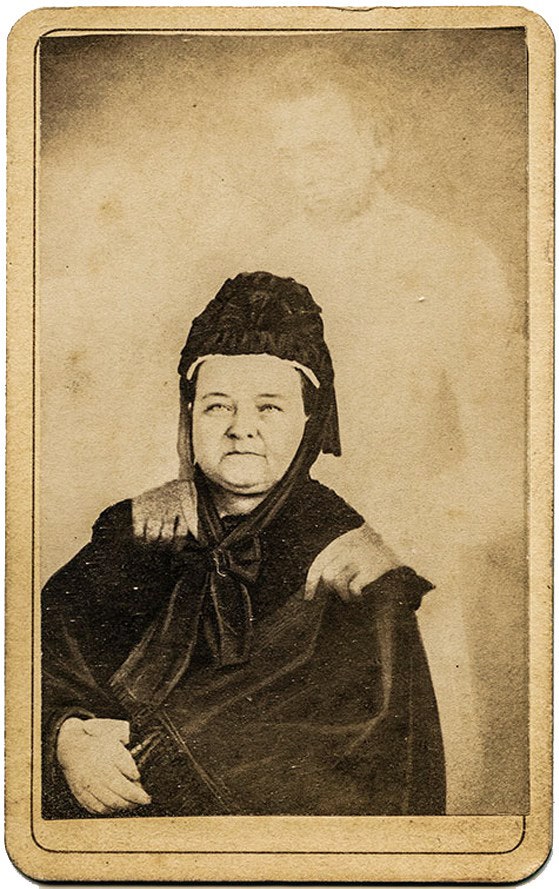 Technique popular in the 19th century to capture the invisible spirits of the deceased.
 Ability to produce a visible image, usually photographic, by purely mental means.
