

Wikimedia Commons
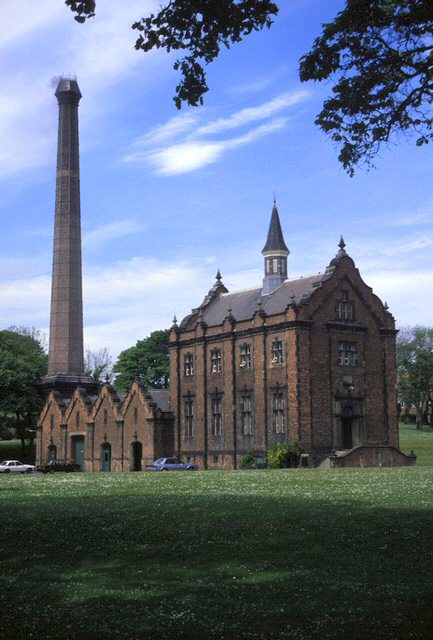
The Ryhope Engines Museum is housed in the Grade II* listed Structure of particular architectural and/or historic interest deserving of special protection. former Ryhope Pumping Station in Sunderland, Tyne and Wear, which provided water for domestic and industrial purposes pumped from the water table below. It was designed by Thomas Hawksley and built in 1866–1869, and was operational until 1967. The building is also a Scheduled Ancient Monument.[1][2]
The pumping station was constructed by the Sunderland and South Shields Water Company, founded in 1852; the building is now owned by their successor, Northumbrian Water.[3] It is “loosely” Jacobean in style, with curving Dutch gables and a tapering octagonal brick chimney. The historian of British industrial architecture Hubert Pragnell has called it a “cathedral of pistons and brass set within a fine shell of Victorian brickwork with no expense spared”.[4]
The interior contains the original pumping equipment with two massive 100 bhp (75 kw) beam engines by R & W Hawthorne, and three Lancashire boilers of 1908, two of which are in regular use. There is also a blacksmith’s forge, a waterwheel, numerous other steam engines, pumps, and various other devices associated with the water distribution industry. The beam engines are maintained by volunteers from the Ryhope Engine Trust, and are periodically demonstrated working, although the water they pump no longer enters the public supply.[1][2]
