
Wikimedia Commons
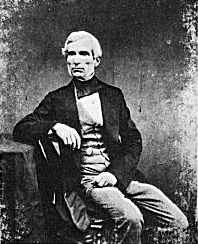
Antoine François Jean Claudet (12 August 1797 – 27 December 1867) was a French photographer and inventor active in London, the last London photographer to offer daguerreotype portraits.[1]
Claudet was born in Château de Rosay, Lyons, France, the son of a gentleman of independent means. After completing his education he joined the banking firm owned by his uncle, and was installed as co-director of the glassworks of Choisy-le-Roi, near Paris, along with Georges Bontemps. In 1829 Claudet opened a warehouse in London as an outlet for the firm’s specialities of glass shades, painted glass, and sheet glass.
After Loius Daguerre revealed his photographic process to the world in 1839, Claudet hurried to Paris to learn more about it from the inventor. The process had been purchased by the French government to make it free to the world, except for England, where Daguerre had taken out a patent. Unable to persuade his partner to purchase the patent, Claudet acquired an individual licence, purchasing early examples from Daguerre’s pupils and selling them through his glass shop at 89 High Holborn in London.[1]
The early daguerrotype process was very slow, and required a great deal of sunlight. Claudet discovered that chlorine and bromine could accelerate the process, bringing exposure times down to levels practical for portraiture.[1] It has been estimated that Claudet made more than 1800 daguerrotypes a year of subjects including Ada Lovelace, Michael Faraday and Charles Babbage.[2] His daguerreotype of Hemi Pomara, in the National Library of Australia, is the oldest known photograph of any Māori person.[3]
Among Claudet’s other innovations was the idea of using red light in the dark-room, the use of artificial light and of painted backdrops.[1]
Following a highly successful showing of his daguerreotypes at the Great Exhibition of 1851, Claudet constructed what he called a Temple to Photography at 107 Regent Street, recording the history of the “young art”. He was appointed photographer to the queen in 1853.[1]
Personal life
Claudet married Julie Bourdelain (d. 1881), and the couple had eight children, the youngest of whom, Francis George Claudet (1837–1906), became a noted amateur photographer in Canada.[4] Following an accident while disembarking from an omnibus, he died at his home in London on 27 December 1867.[1]
Less than a month after Claudet’s death, on 23 January 1868, the Temple of Photography was consumed by fire and totally destroyed, along with its contents.[1]
