
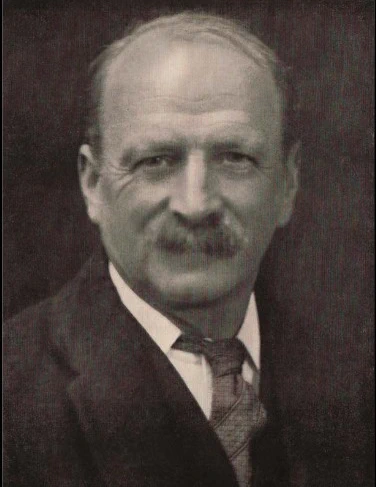
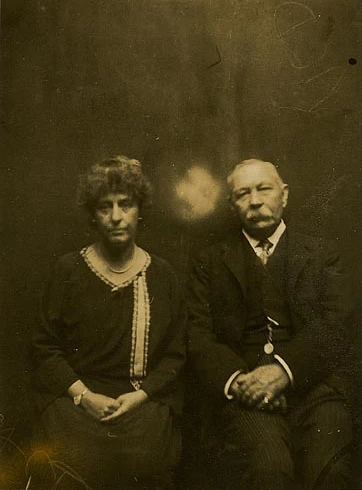
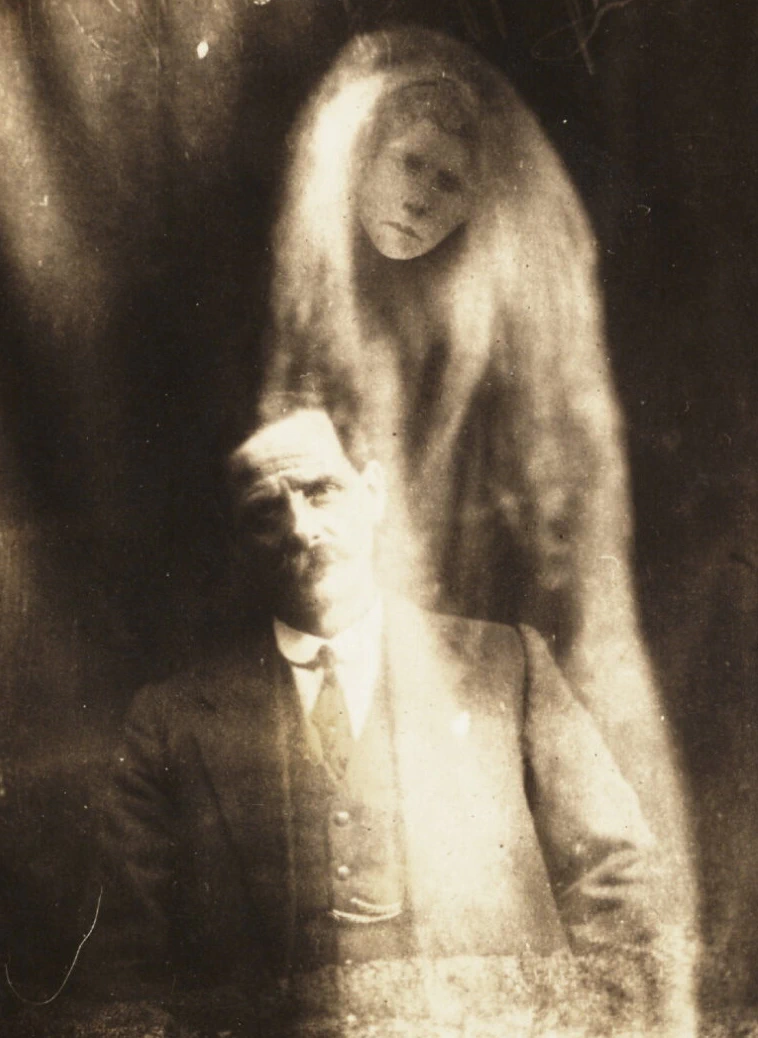
William Hope (1863 – 8 March 1933) was one of the most famous spirit photographers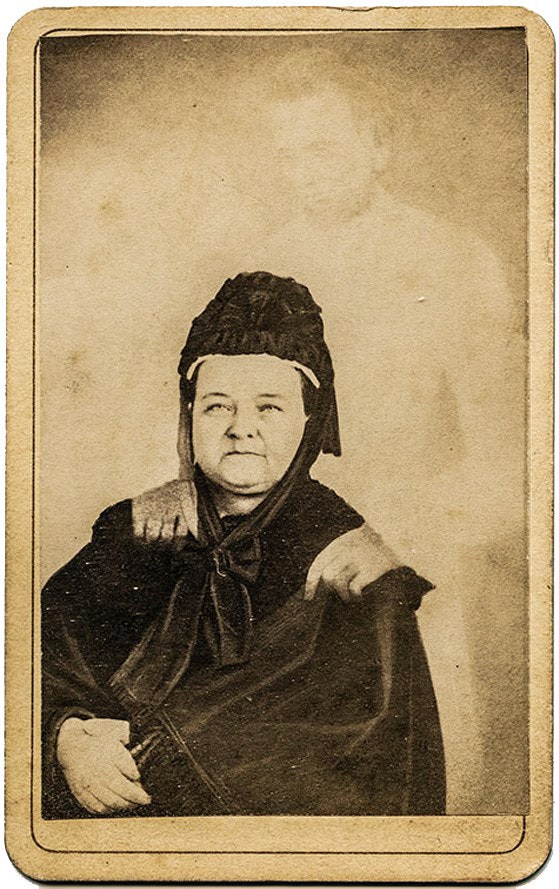 Technique popular in the 19th century to capture the invisible spirits of the deceased. of the early 20th century. He was the founder and leading member of a then well-known spiritualist photography group based in Crewe, Cheshire, known as the Crewe Circle. Over the course of his career, he claimed to have photographed more than 2,500 spirits.[1][2]
Hope took his first spirit photograph in 1905. While developing the photograph of a colleague, he noticed an additional figure in the image, that of his colleague’s recently deceased sister.[1]
Hope started his working life as a carpenter. After setting himself up in a studio in a “humble” building at 144 Market Street, Crewe, he charged 4 shillings and 6 pence, equivalent to about £36 as at 2025,[a]Calculated using the retail price index.[3] for a dozen prints of his spirit photographs. He based his prices on the time it took him to produce the prints, at the rate he would have charged as a carpenter. He had moved to London by 1921, and established himself at the British College of Psychic Science, where sitters paid upwards of 30 shillings, equivalent to £83 as at 2025.[4][b]Calculated using the retail price index.[3]
In February 1922 the Society for Psychical Research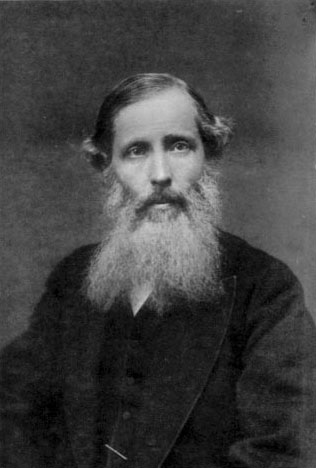 Registered charity founded in 1882 to conduct scientific investigations into psychic and paranormal phenomena. sent the psychical researcher Harry Price to investigate the methods used by the Crewe Circle. Unknown to Hope, Price marked his photographic plates, along with providing additional plates that had been covertly etched by X-rays. Although Hope succeeded in producing a number of spirit photographs, none of them contained the etchings or the marks Price had put on Hope’s materials, showing that he had exchanged prepared plates for the originals.[1]
Price’s findings were published in the Journal of the Society for Psychical Research. He also reprinted the results of his investigation into the Crewe Circle in a booklet titled Cold Light on Spritualistic Phenomena. Sir Arthur Conan Doyle, who had visited Hope’s Crewe studio in 1919 and been “deeply impressed” by his own experience there, took up the defence of the Crewe Circle, publishing his The Case for Spirit Photography in 1923. He also entreated Price to take his booklet out of circulation, arguing that “I do feel strongly that the popular sixpenny pamphlet designed to ruin a man who had 17 years of fine psychic work behind him is wrong”.[1]
In 1932 Fred Barlow, a former friend and supporter of Hope’s work and former Secretary of the Society for the Study of Supernormal Pictures, along with Major W. Rampling-Rose, gave a joint lecture to the Society for Psychical Research to present their findings gathered from an extensive series of tests on the methods Hope used to produce his spirit photographs. They concluded that the spirits appearing in Hope’s photographs were produced fraudulently.[1][5]
William Hope died at Salford Hospital on 8 March 1933. In the words of the psychic researcher Massimo Polidoro, his case and that of the Crewe Circle deserves to be remembered today
Gallery


Notes
| a, b | Calculated using the retail price index.[3] |
|---|
