

National Library of Wales
Compared to the other countries of Great Britain, there were markedly fewer witch trials or accusations of witchcraft in Wales during the early modern period. From the 16th to the mid-18th century there were thirty-seven witchcraft prosecutions in Wales, resulting in five executions: four women and one man.[1] By comparison, during the same period in neighbouring England there were up to two thousand people tried for witchcraft,[2] of whom almost a quarter were found guilty and executed.[3]
The corresponding figures for Scotland make for an even more stark contrast: an estimated four to six thousand prosecutions for witchcraft in that country,[4] and more than fifteen hundred executions.[5] These differences cannot be explained by population statistics. Wales was relatively sparsely populated during the period, with an estimated population one third that of Scotland,[a]The population of Wales is estimated to have been 390,000 in 1700,[6] and that of Scotland about 1.2 million at about the same time.[7] yet it was very far from having one third of the number of prosecutions or executions for witchcraft.
Several ideas have been proposed to explain this numerical discrepancy, including that the Welsh courts, although enforcing English law, still favoured the old Welsh practice of customary laws.
Legal status
Main article: Witchcraft Acts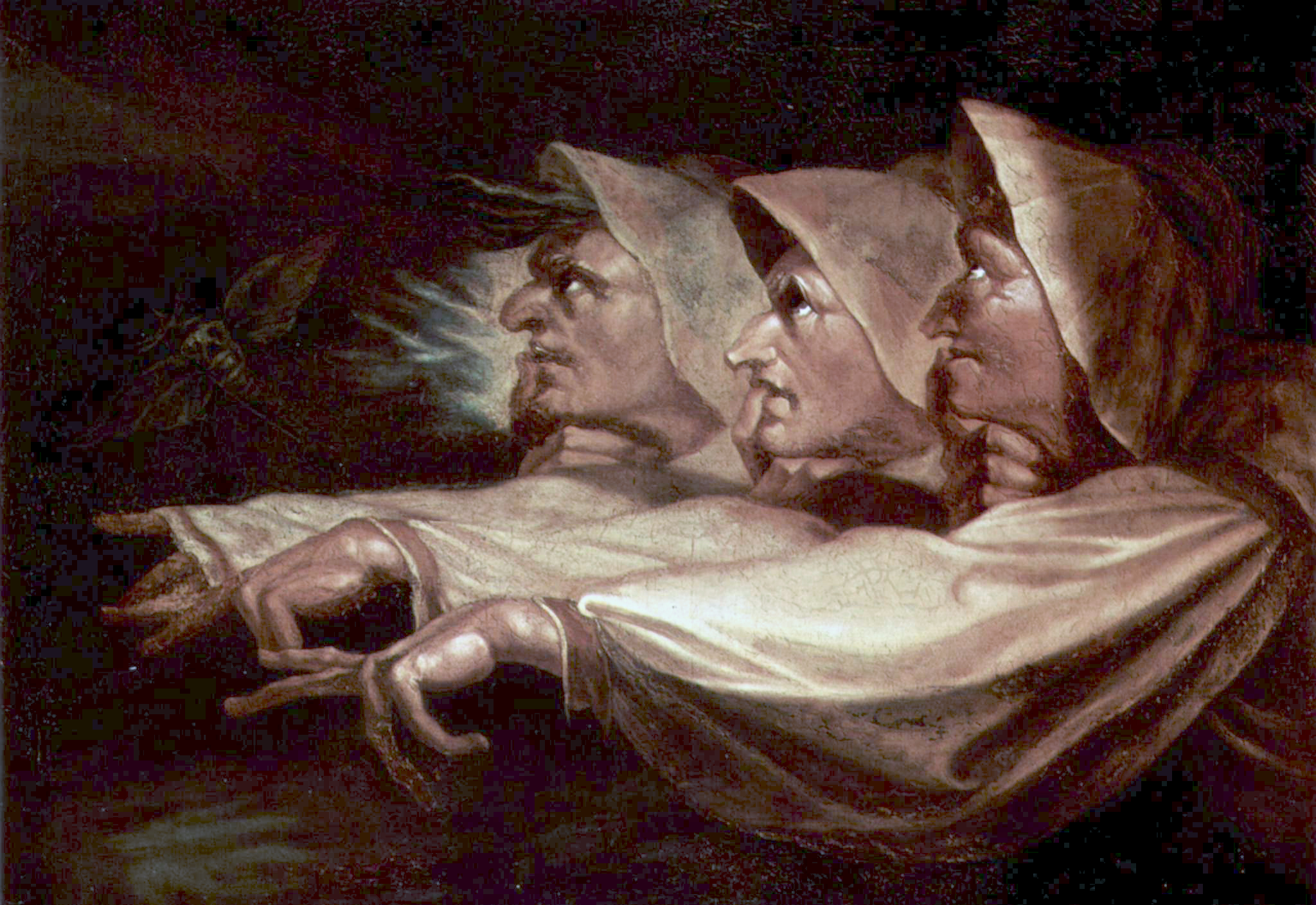 Series of Acts passed by the Parliaments of England and Scotland making witchcraft a secular offence punishable by death.
The Acts of Union from 1536 to 1543 brought Wales under English rule and imposed the English legal system.[8] Witchcraft had not become a felony in England until the passage of Henry VIII’s short-lived Witchcraft Act 1542, although it had long been considered a crime by the Church, punishable in the ecclesiastical courts; but they had only limited powers to imprison, and could not impose fines or the death penalty.[9]
The 1542 Act, repealed in 1547, had failed to define what witchcraft actually was. Its successor, the Witchcraft Act of 1563Series of Acts passed by the Parliaments of England and Scotland making witchcraft a secular offence punishable by death., demanded the death penalty for witchcraft, but only if harm had been caused.[10] The Witchcraft Act 1604Series of Acts passed by the Parliaments of England and Scotland making witchcraft a secular offence punishable by death. broadened the scope of the earlier legislation to include the death penalty for those who invoked evil spirits or communed with familiar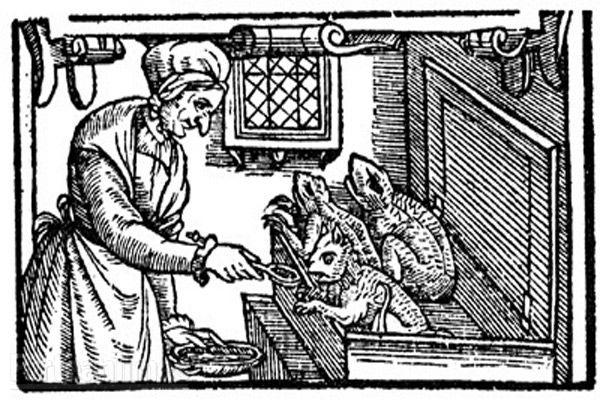 Demonic spirit who attends upon a witch, possessing magical powers that can be used for good or evil. Often taking the form of a small animal such as a cat. spirits.[11]
The Witchcraft Act 1735 Sometimes dated 1736, an Act of Parliament that repealed the statutes concerning witchcraft throughout Great Britain, including Scotland. finally brought an end to prosecutions for alleged witchcraft in England after sceptical jurists, especially Sir John Holt (1642–1710), had already largely ended convictions of alleged witches under English law.
Prosecutions and executions
Of the thirty-seven witchcraft prosecutions in Wales, only eight of the accused were found guilty, and only five received a death sentence.[1] There is no record of anyone in England or Wales having been prosecuted under the 1542 Witchcraft Act.[12]
The first prosecution for witchcraft in Wales under the 1563 Act was that of Gwen ferch Ellis, of Bettws, Denbighshire, in 1594.[13][b]ferch is the Welsh for “daughter of”; ap is the Welsh for “son of”. It was alleged that she had left a charm in the form of a kind of poem written backwards in the home of a member of the local gentry, Thomas Mostyn, which was interpreted as a spellVerbal charm to be spoken or chanted, sometimes a single magic word such as Abracadabra or the Renervate encountered in the fictional Harry Potter series of books., in an attempt to harm him and his family. Despite protesting her innocence, Gwen was found guilty and hanged.[13]
In 1622, in Caernarfon, a trio of siblings – Lowri ferch Evan, Agnes ferch Evan, and Rhydderch ap Evan – were found guilty of causing harm by witchcraft and executed. They were accused of killing the wife of a member of the local gentry, Margaret Hughes, and the bewitchment of her daughter Mary.[14]
The last execution for witchcraft in Wales took place in 1655, in Beaumaris, Anglesey. Margaret ferch Richard was found guilty of having caused the death of another woman, Gwen Meredith, who had been ill prior to her untimely death.[14]
Welsh customary law
Among the suggestions as to why there were so few witchcraft prosecutions in Wales is the idea that during the early years of English rule the Welsh courts still favoured their country’s old customary laws, which emphasised compensation of the victim over punishment of the accused, to ensure a peaceful outcome and maintain harmony in the community.[8]
The historian Richard Suggett has alternatively suggested that the Welsh courts were faced with dealing with a flood of cattle thieves and other felons, leaving little time for the “luxury” of witchcraft prosecutions.[13]
See also
- Witch trials in Early Modern England
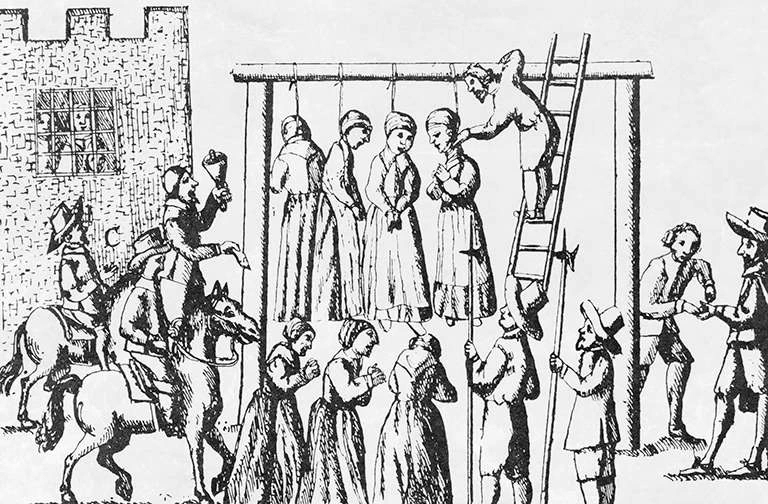 History of witch trials in England from the 15th to the 18th century.
 - Witch trials in Early Modern Scotland
 Judicial proceedings in Scotland between the early 16th century and the mid-18th century concerned with crimes of witchcraft, part of a series of witch trials in Early Modern Europe.
