
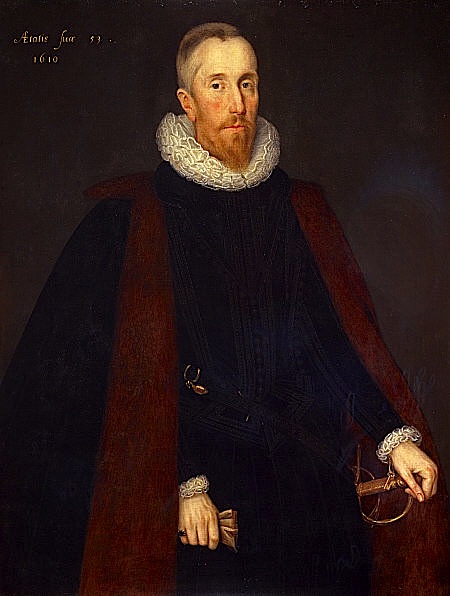
Wikimedia Commons
Geillis Johnstone, a resident of Musselburgh, Scotland, was twice accused of witchcraft in the early seventeenth century. Convicted by the Presbytery of Dalkeith in 1609, she successfully challenged the proceedings before the Privy Council, which ruled that the church court lacked jurisdiction. Retried before the regality court of Dunfermline in 1614, she was acquitted.
The extensive records of her case provide a rare insight into the relationship between local accusations, ecclesiastical authority, and secular justice in Early Modern Scotland. They also preserve the only recorded allegation of infant sacrifice in a Scottish witchcraft prosecution, and the only witchcraft case believed to be tried in a regality court.
Family life and background
Geillis Johnstone, also spelled Johnnestone,[1][a]In Scotland during this period spelling was not standardised, resulting in many names and places appearing in multiple forms. Modern-day texts often use an anglicised version;[2] some other spellings of this surname may be: Johnstoun; Johnestoun; Jonsone; Jonstoun; or Johnnestoun.[3] was married to John Duncan, a brewer and Musselburgh burgess. Left a widow on her husband’s death in 1596, she raised their five sons: Robert, Gavin, James, William, and John. Although not especially affluent, she had sufficient wealth to engage several servants and pay for her house to be thatched.[4]
The marriage of Geillis’s son John to a relative, possibly a daughter of the wealthy Vernor family, was arranged with a dowry of 450 merks to be paid to John as part of the contract.[5][b]A Scots merk was equivalent to 13 shillings 4d.[6] The couple had one child, a daughter, but at the time of John’s death in 1608 the dowry was still outstanding, leading to acrimony between the Duncan and Vernor families.[7]
Accusations and trials
Over a period of many years, Geillis acquired a reputation within the community as a witch and as someone who consulted with reputed witches.[8][c]During the North Berwick witch trials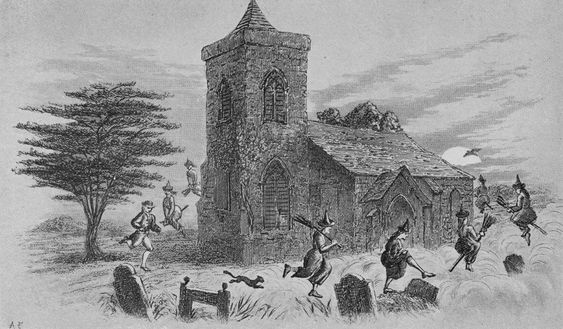 Series of Scottish witch trials held between 1590 and 1593. in January 1591, Agnes Sampson
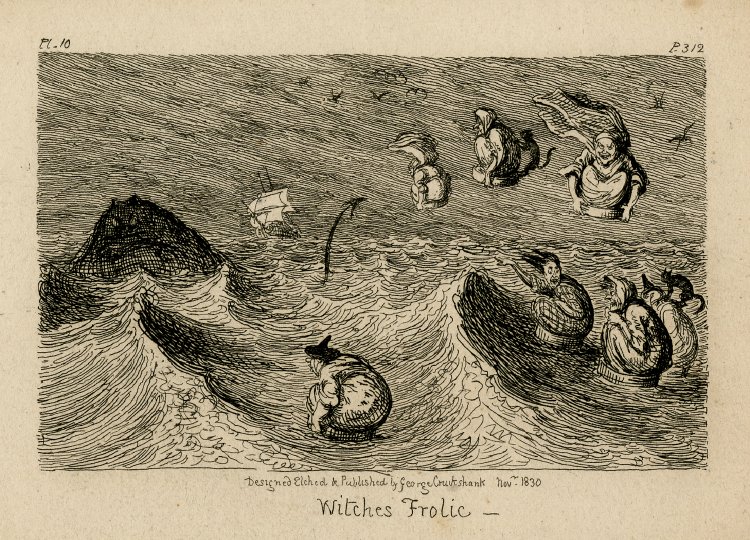 Scottish midwife, cunning woman and healer; central figure in the North Berwick witch trials. confessed that Geillis had sought her assistance when her husband, John Duncan, was ill, and that she advised a remedy involving an egg steeped in vinegar; this allegation formed part of the later case that Geillis had consulted reputed witches for healing purposes.[9] The allegations against her centred on her association with reputed practitioners of magic and her involvement in attempts to cure illness by unconventional means.[10] Among the accusations were that she had sought assistance from Agnes SampsonScottish midwife, cunning woman and healer; central figure in the North Berwick witch trials. and Irish Jonet;[11][12][d]The academic Louise Yeoman cautiously suggests Irish Jonet may be “Catherene Carrutheris alias callit Erisch Jonet”, who was referred to in the 1591 trial of Euphame MacCalzean
 Wealthy Scottish heiress and member of the gentry convicted of witchcraft. A key figure in the North Berwick witchcraft trials of 1590–1591.[13] Geillis was incarcerated for seven weeks while the Dalkeith Presbytery investigated the matter.[14]
The allegations initially arose from efforts to obtain a cure for Geillis’s son James Duncan. During interrogation, Irish Jonet’s account expanded far beyond a simple healing consultation. What had begun as an attempt to remedy illness was recast as Irish Jonet confessing to an incident involving the Devil, allegations that Geillis had sacrificed her stillborn grandchild to him, and claims that Irish Jonet had sexual intercourse with the Devil. This, the only allegation of infant sacrifice recorded in a Scottish witchcraft prosecution, became a central factor in the presbytery’s determination to pursue the case against Geillis, alongside the influence of her opponents within the Vernor family.[15][16][e]The allegation survives only in testimony obtained through the investigation and should not be interpreted as evidence that such an event actually occurred.
Once the presbytery secured Irish Jonet’s confession, coupled with evidence against Geillis from the Vernor family, it decided to press ahead with a trial under the Scottish Witchcraft Act of 1563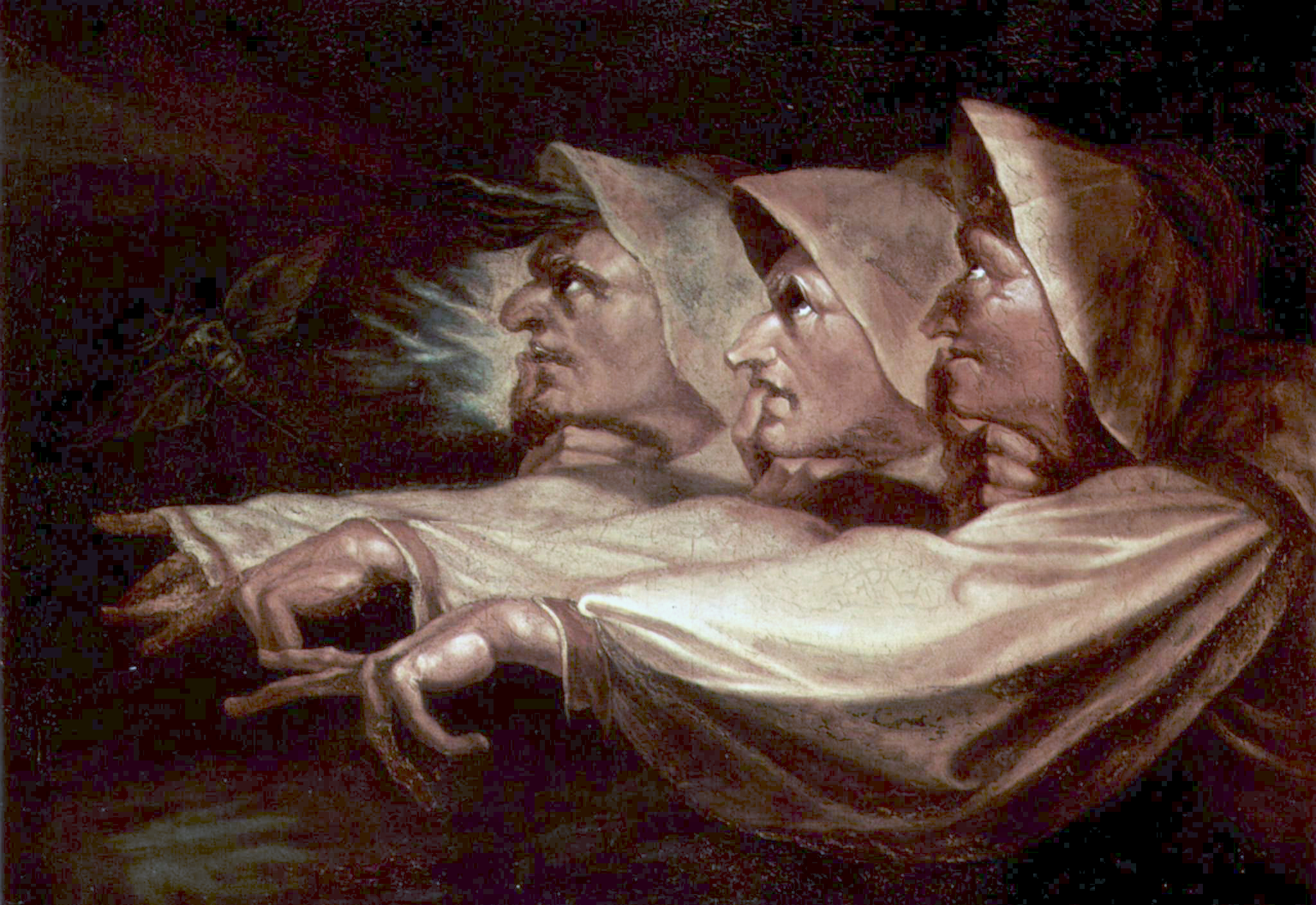 Series of Acts passed by the Parliaments of England and Scotland making witchcraft a secular offence punishable by death. against Geillis, Irish Jonet and a servant of a James Newton named Jonet Drysdaill, for witchcraft.[15][16]
First trial
In early 1609 Geillis was tried for witchcraft before the Dalkeith Presbytery.[8][f]Snodgrass gives an interrogation date of 10 December 1607 and trial date of 18 December 1607 for Geillis;[1] these dates appear to refer to the unrelated case of Bartie Petersone rather than Geillis Johnstone, as Wasser gives these dates when alluding to another case: “The presbytery was also concerned with witchcraft. In 1607 it scored a coup by co-operating with the Justice Depute in the trial of Bartie Petersone. A series of presbytery investigations culminated in questioning by the Justice Depute on 10 December 1607 and a trial on 18 December. This success encouraged more investigations, and by early 1609, the presbytery was actively pursuing three accused witches: Jonet Drysdaill, “Irish Jonet” and Geillis Johnstone.”[13] Neither Irish Jonet nor Jonet Drysdaill appeared at trial: Drysdaill, who had been defended by her employer, may have been released, escaped or died; Irish Jonet probably absconded, as Geillis was later accused of organising her escape.[16]
The Dalkeith Presbytery comprised thirteen or fourteen ministers, who viewed the prosecution of suspected witches as part of their responsibility to uphold a “godly policy” and enforce what they understood to be God’s moral laws.[13] Geillis was declared guilty of witchcraft,[8] but she petitioned the Privy Council to overturn her conviction, asserting that the presbytery did not have the jurisdiction to try her on witchcraft charges.[8] Her son also made representations on her behalf, arguing that as well as the jurisdiction irregularity, the presbytery had acted on malicious gossip spread by his mother’s enemies and their actions seemed intentionally aimed at undermining her reputation.[14]
On 20 July 1609, the Privy Council ruled in favour of Geillis and her legal team, overturning the presbytery’s conclusions.[17] While it quashed the ruling purely on the jurisdiction breach, it did not comment on the other points raised.[14] It rebuked the presbytery for its “preposterous” handling of a matter that strictly fell under the authority of the Justice General or the Dunfermline regality.[18]
1614 trial
The retrial began on 2 March 1614[8] in the regality court,[19] which, according to the academics Michael B. Wasser and Louise A. Yeoman, is the only known Scottish witchcraft prosecution to have been heard in a regality court.[20] Although the proceedings fell under the jurisdiction of the regality court of Dunfermline, permission was obtained for the case to be heard in Edinburgh,[21] allowing many of Scotland’s leading legal authorities to participate and observe the proceedings.[22]
Unlike the proceedings before the Dalkeith Presbytery, the case was heard before a court possessing recognised jurisdiction over witchcraft offences.[8] Presiding over the proceedings was Alexander Seton, Earl of Dunfermline, whom Wasser describes as “the most respected lawyer in Scotland”,[23] and who had been a member of the Privy Council that had overturned Geillis’s presbytery conviction in 1609. He assembled a selection of the most prominent legal minds to hear the case.[24]
The indictment comprised twenty-six separate articles, repeating many of the allegations previously advanced by the presbytery. These included allegations that Geillis had consulted reputed witches, sought supernatural cures for illness, trafficked with diabolical forces, and been involved in the events described in Irish Jonet’s confession. Wasser and Yeoman note that much of the case rested upon reputation, hearsay and long-standing community suspicions, instead of direct evidence of criminal acts.[10]
A significant part of the proceedings concerned questions of procedure and admissibility. After extensive legal argument, the judges ruled that evidence from the 1609 presbytery proceedings could not simply be reintroduced at the retrial. They further rejected the use of female testimony on the grounds that witchcraft should not be treated as a crimen exceptum, an exceptional offence exempt from normal evidential safeguards.[25] The remaining evidence failed to persuade the court, and Geillis was acquitted on all charges.[26]
Modern interpretations
Wasser and Yeoman argue that the accusations against Geillis emerged from a prolonged process by which she acquired a reputation as a witch within her community. Rather than arising from a single incident, the prosecution reflected years of local suspicion, gossip and interpersonal conflict.[8] Historians have also viewed the case as an example of the wider struggle between ecclesiastical and secular authority in early seventeenth-century Scotland. The Privy Council’s decision to overturn the presbytery’s proceedings formed part of a broader movement towards regulating witchcraft prosecutions through recognised legal channels and stricter judicial oversight.[8][27]
Citing a theory that accusations of witchcraft may follow quarrels over inheritance, the academics Wasser and Yeoman suggest that bitterness between Geillis and the Vernor family may have stemmed from disputes arising from female inheritance customs following John’s death. Rather than acting against John’s heiress, the Vernors began to accuse Geillis of witchcraft. Similarities can be seen in the earlier trial of Euphame MacCalzeanWealthy Scottish heiress and member of the gentry convicted of witchcraft. A key figure in the North Berwick witchcraft trials of 1590–1591., in which financial gain may have influenced her brother-in-law’s role in the allegations against her.[7]
Wasser believes that the Earl of Dunfermline’s decision to hold the 1614 trial in Edinburgh rather than Musselburgh was to gain publicity, not to help someone for whom he felt some sympathy; “Dunfermline’s goal was one of principle, not personal favour.”[19]
The academic Brian P. Levack concludes that Geillis’s acquittal was partly due to the defence advocates who represented her,[28] including one of her sons, William.[4] According to Yeoman, Dunfermline helped secure Geillis’s acquittal by demanding an exceptionally rigorous application of Scots law. Yeoman also highlights Wasser’s argument that Dunfermline’s strict evidentiary standards during his tenure as chancellor were instrumental in reducing witch prosecutions.[12] The independent researcher Ciaran Jones adds that Dunfermline took a “cautious approach to witch-hunting”, and “[surrounded] himself with like-minded colleagues.”[29]
Geillis’s case illustrates the interaction of community suspicion, ecclesiastical prosecution, and secular justice in early modern Scotland. The surviving records provide an unusually detailed example of how local accusations could become entangled with wider debates over jurisdiction, evidence, and legal authority.[30][31]
See also
- Witch trials in Early Modern Scotland
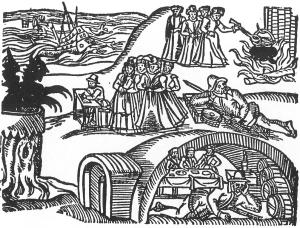 Judicial proceedings in Scotland between the early 16th century and the mid-18th century concerned with crimes of witchcraft, part of a series of witch trials in Early Modern Europe.
Notes
| a | In Scotland during this period spelling was not standardised, resulting in many names and places appearing in multiple forms. Modern-day texts often use an anglicised version;[2] some other spellings of this surname may be: Johnstoun; Johnestoun; Jonsone; Jonstoun; or Johnnestoun.[3] |
|---|---|
| b | A Scots merk was equivalent to 13 shillings 4d.[6] |
| c | During the North Berwick witch trialsSeries of Scottish witch trials held between 1590 and 1593. in January 1591, Agnes SampsonScottish midwife, cunning woman and healer; central figure in the North Berwick witch trials. confessed that Geillis had sought her assistance when her husband, John Duncan, was ill, and that she advised a remedy involving an egg steeped in vinegar; this allegation formed part of the later case that Geillis had consulted reputed witches for healing purposes.[9] |
| d | The academic Louise Yeoman cautiously suggests Irish Jonet may be “Catherene Carrutheris alias callit Erisch Jonet”, who was referred to in the 1591 trial of Euphame MacCalzeanWealthy Scottish heiress and member of the gentry convicted of witchcraft. A key figure in the North Berwick witchcraft trials of 1590–1591.[13] |
| e | The allegation survives only in testimony obtained through the investigation and should not be interpreted as evidence that such an event actually occurred. |
| f | Snodgrass gives an interrogation date of 10 December 1607 and trial date of 18 December 1607 for Geillis;[1] these dates appear to refer to the unrelated case of Bartie Petersone rather than Geillis Johnstone, as Wasser gives these dates when alluding to another case: “The presbytery was also concerned with witchcraft. In 1607 it scored a coup by co-operating with the Justice Depute in the trial of Bartie Petersone. A series of presbytery investigations culminated in questioning by the Justice Depute on 10 December 1607 and a trial on 18 December. This success encouraged more investigations, and by early 1609, the presbytery was actively pursuing three accused witches: Jonet Drysdaill, “Irish Jonet” and Geillis Johnstone.”[13] |
